
What Is a Togo Sofa? The Ligne Roset Icon Explained
 Pumela Design
The Togo sofa is a low, frameless sofa made almost entirely of molded foam, designed by Michel Ducaroy and launched by the French furniture house Ligne Roset in 1973. It was the first sofa built without an internal frame or springs: a floor-hugging stack of polyether foam in different densities, wrapped in quilted, pleated upholstery. Half a century later it is still in production, still imitated, and more visible than ever in designer rooms and on social feeds. This guide covers the designer, the breakthrough, what “Togo style” means today, and how to buy the look honestly.
Togo sofa at a glance
- Designer: Michel Ducaroy, who joined the Roset family firm in 1954.
- Launched: 1973, the year the brand became Ligne Roset.
- Maker: Ligne Roset, in continuous production ever since.
- Claim to fame: the first sofa made entirely of foam, with no frame or springs.
- Construction: layered polyether foam densities wrapped in quilted, pleated covers.
- Why it’s copied: the low, gathered “Togo style” look, reproduced at every price tier.
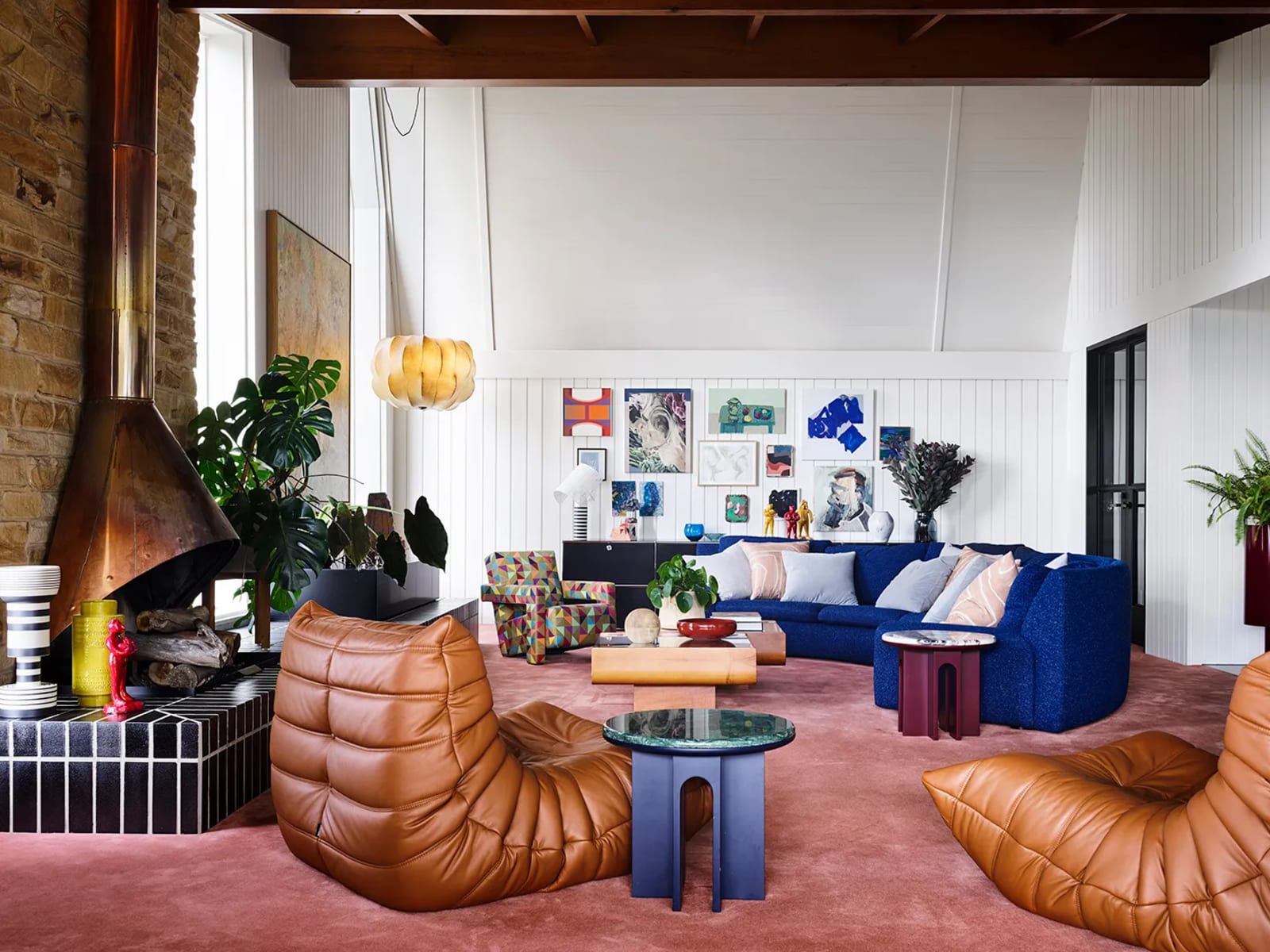
Who Designed the Togo Sofa? Michel Ducaroy and Ligne Roset
The Togo is the work of Michel Ducaroy (1925–2009), a French designer born into a family of furniture makers and trained at the École des Beaux-Arts in Lyon. He began working with the Roset company, a family furniture business founded in eastern France in 1860, in 1954, and he shaped its design output for decades. In 1973, the same year the firm began trading as Ligne Roset, Ducaroy unveiled the Togo at Paris’s Salon des Arts Ménagers. It went on to become the young brand’s signature.
Ducaroy’s own account of the origin is famously low-tech. He said the silhouette came from an aluminum toothpaste tube that “folded back on itself like a stovepipe and closed at both ends,” squeezed, wrinkled, and sealed. That image captures the Togo’s character exactly: soft, gathered, organic, and nothing like the upright, leg-borne seating that dominated French living rooms in the early 1970s.
Why the Togo Was a Design Breakthrough
In 1973, a “real” sofa meant a wooden carcass, springs, legs, and firm cushions. The Ligne Roset Togo sofa is widely credited as the first made entirely of foam: no internal frame, no springs, no base at all. Instead, layers of polyether foam in different densities are stacked: softer, more enveloping foam where you sit, firmer foam underneath to hold the geometry. Even the covers do structural work: quilted with wadding and stitched in horizontal pleats, their tension keeps the gathered silhouette from collapsing.
The missing base was the scandal. Skeptics assumed the factory had simply forgotten the legs. But frameless, all-foam construction is exactly what makes the Togo good at its job:
- It sits low and lounges. At roughly floor level, it invites you to sink in rather than sit up straight.
- It supports without springs. The foam itself distributes weight, which is why a properly made example holds its shape and comfort for decades.
- It is genuinely movable. Because there’s no frame, the piece is light enough for one or two people to shift across a room.
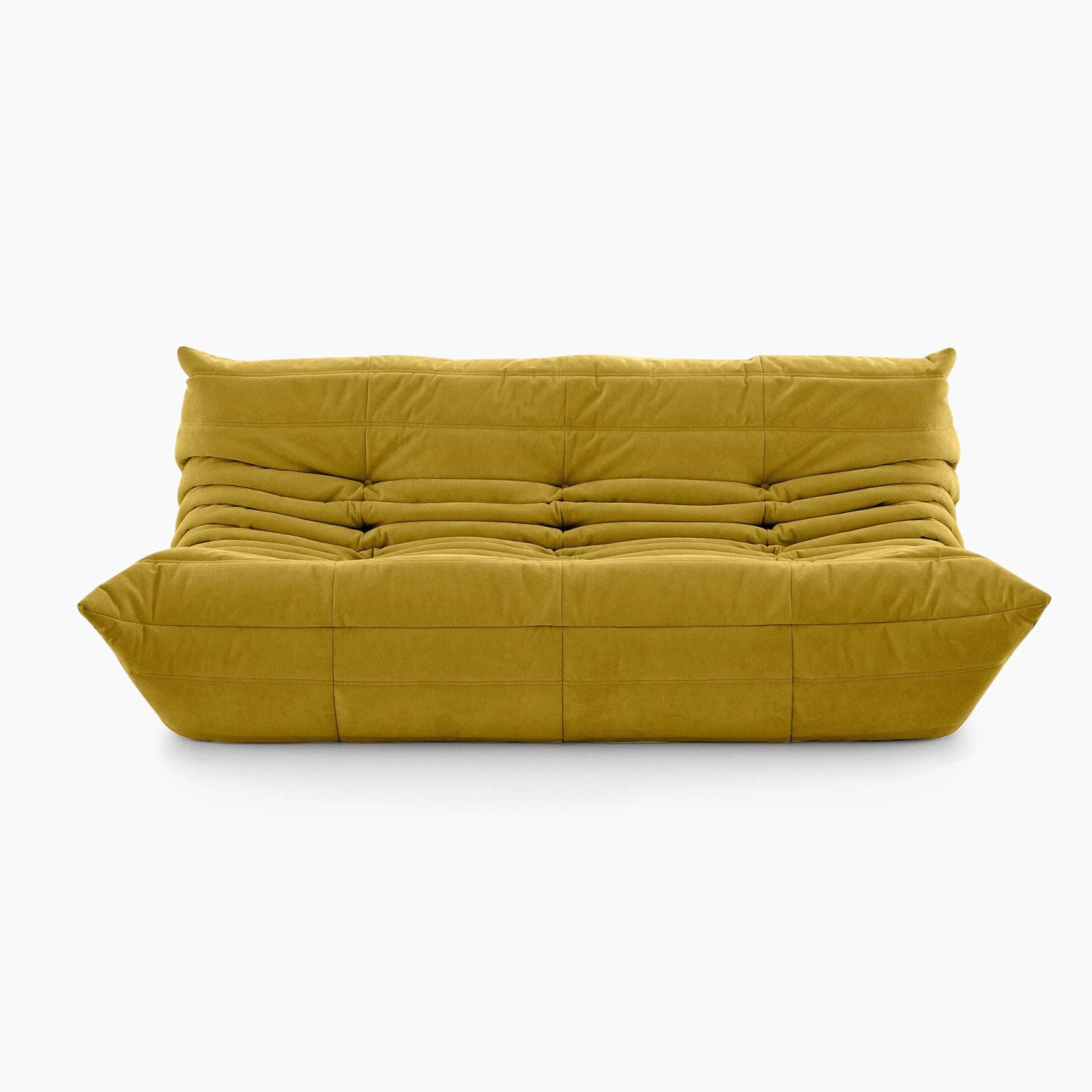
Ligne Roset has kept the Togo in continuous production since 1973, an unusually long run for a single design, and its influence runs through almost every foam lounge sofa that followed. That combination of technical first and cultural staying power is why the Togo is treated as one of the defining furniture designs of the twentieth century.
What Is “Togo Style” Today?
“Togo style” has drifted free of the label and now describes a look. If a piece is low to the ground, rounded and squishy rather than angular, and upholstered in fabric that visibly pleats or gathers like a sleeve, most design-minded shoppers would call it Togo style, whether it’s a Togo-style sofa, a Togo-style chair, or a Togo-style couch. The hallmarks:
- Floor-hugging height with no exposed legs
- Chunky, pillowy proportions with horizontal pleated channels
- Upholstery that is supposed to look wrinkled; the gathers are the design
- A reclined posture: low seat, deep cushion, arms optional
The look is also more adaptable than its 1970s origins suggest. It anchors a retro revival room, but it softens minimalist and contemporary spaces just as well, and a single Togo-style chair is one of the easiest ways to give an empty corner a designer signature without committing to a full sofa.
Why the surge in popularity right now? The same qualities that puzzled 1973 buyers make the Togo perfect for today’s interiors: it photographs beautifully, it reads as relaxed rather than stiff, and it signals confident taste. On Instagram and TikTok, a pleated, floor-hugging sofa has become shorthand for a “designer living room.” That visibility has also built an enormous market of Togo-inspired pieces at every price tier, from faithful homages to loose interpretations.
The Togo Family: Sofas, Loveseats, Chairs, and Corners
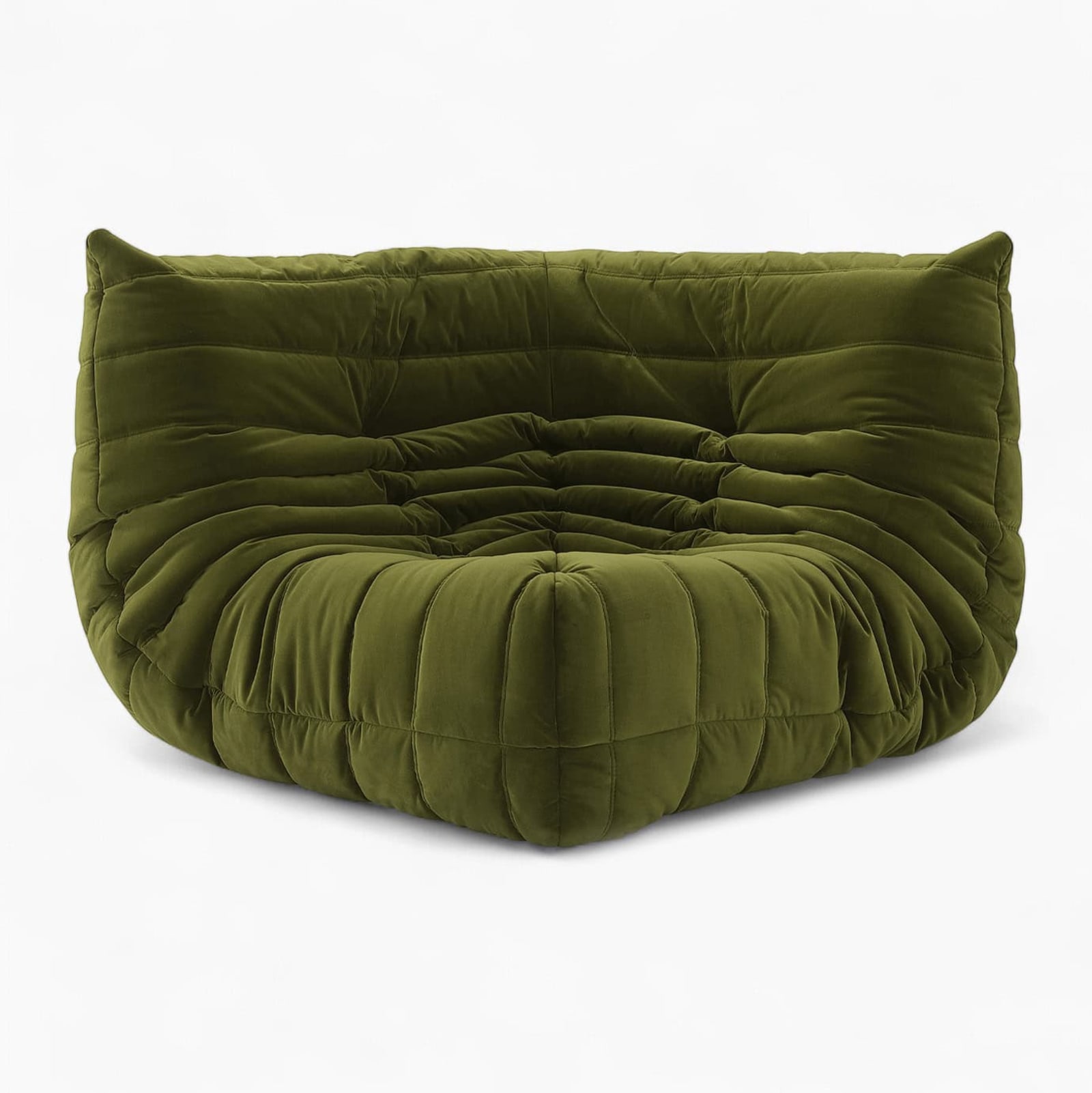
The Togo was never a single sofa. It is a modular family, and its mix-and-match flexibility is a big part of its appeal. The lineup runs from a compact armchair to a three-seat sofa, with loveseats, corner units, ottomans, and low lounge variations in between. Because every piece sits at roughly the same low height, configurations line up naturally: one chair beside a fireplace, a loveseat with an ottoman, or a full sectional built from corners and sofas.
If you are planning a room, start with the proportions of the classic three-seat sofa: roughly 72 inches wide, about 37 inches deep, and 27–28 inches tall, with a low seat height around 14 inches. Treat those as approximations, because covers, fills, and manufacturing all vary, and see our Togo sofa dimensions and layout guide for exact measurements and room-layout guidance.
Building the same family on a Togo-style budget is straightforward. Our Togo sofa replica anchors the room, a Togo-style chair adds a single-seat accent, and loveseats, corner sections, ottomans, and fireside lounges fill out the rest of the configuration.
Original Ligne Roset Togo vs. Togo Replicas: What Actually Differs
Let’s be direct about the two markets. An original is made by Ligne Roset: molded multi-density polyether foam, hand-sewn pleated covers, a deep fabric program, and decades of quality control behind every piece. It is a legitimate object of design history, and if the original fits your budget, nothing here should talk you out of it.
A Togo dupe or replica is an independent, look-alike piece inspired by the design rather than made by the brand. To be clear: the Togo design and name belong to Ligne Roset, and Pumela is not affiliated with or endorsed by them. Our pieces are our own Togo-inspired designs. Quality across the replica market runs the full spectrum, and that is where the real differences show up:
- Frame and fill. The best replicas mirror the original’s logic: layered foam densities, no hard internal frame. Weak ones stuff fiberfill over a basic wood frame and rely on the silhouette to hide it.
- Tailoring. The pleats are the design. On a well-made piece the channels are even and the gathers hold; on a poorly made one the fabric bags out and the quilting goes slack within weeks.
- Materials and honesty. The cover fabric, whether the leather is real or bonded, and the actual foam density determine whether the sofa still feels supportive in year three, and whether the seller will say so plainly.
A product photo can’t tell you most of this, which is why our guide to spotting a bad Togo replica is worth reading before you buy from any seller.
Is a Togo-Style Dupe Worth It?
For most buyers, the honest answer is yes, with caveats. What you pay for in an original is provenance: the Ligne Roset name, its fabric program, and its construction standards. If what you actually want is the silhouette, the low lounge posture, and the way the piece changes a room, a well-made Togo-style sofa delivers those for a fraction of the investment, and many buyers choose dupes deliberately, treating them as long-term furniture rather than placeholders.
What a dupe cannot honestly offer is the original’s pedigree, so buy on construction rather than branding. Ask what is inside the cushions, how the pleats are made, what the cover fabric actually is, and what the seller says about foam density, returns, and warranty. A transparent retailer answers directly; a vague one is a warning sign. If budget is the deciding factor between the two markets, our breakdown of how much a Togo sofa costs lays out the math.
If the upholstery is your last open question, how to choose between a leather or fabric cover starts with the trade-offs that matter.
FAQ
Q: Is the Togo sofa comfortable?
A: Yes, comfort is the whole point of the design. Multi-density foam lets you sink into the seat while firmer layers underneath keep support, and the low, deep posture encourages lounging. It suits people who want a relaxed, enveloping sit rather than an upright, structured one.
Q: Who designed the Togo sofa?
A: French designer Michel Ducaroy, who began working with the Roset family company in 1954 and created the Togo for Ligne Roset in 1973. It remains his best-known design.
Q: Why is the Togo sofa so popular?
A: Three reasons: it was a technical first (widely credited as the first all-foam sofa, with no frame or springs), it has stayed in continuous production for more than fifty years, and its low, pleated look photographs beautifully, making it a fixture of designer interiors on Instagram and TikTok. It also suits today’s relaxed, layered rooms.
Q: Is a Togo replica worth buying?
A: If you want the look and the lounge comfort without paying original prices, a well-made Togo-style dupe is a sensible buy. That is exactly what Pumela builds. Just buy on quality, not the label: foam density, pleat tailoring, and honest materials matter more than anything printed on a tag.
Q: How do I tell an original Togo from a Togo-style sofa?
A: An original carries Ligne Roset branding and documentation and is built from molded multi-density polyether foam with hand-sewn pleated covers, and it is priced accordingly. Reputable look-alikes are labeled honestly as inspired or dupe pieces; if a seller implies you are getting an original at dupe prices, walk away.
Q: What sizes does the Togo come in?
A: The family spans armchairs, loveseats, three-seat sofas, corner units, ottomans, and low lounge variations, all at roughly the same low height so they can be mixed and matched. For exact measurements and room planning, start with the Togo dimensions and layout guide.
If you are ready to bring the look home, shop the Togo sofa and couch dupes in the full Pumela Togo collection.
Written by