
Togo Sofa Leather vs Fabric: Which Upholstery Should You Choose?
 Pumela Design
Before you order a Togo-style sofa, the biggest decision is leather vs fabric. The choice changes how the piece looks, how it feels to sit in, and how it survives pets, kids, and years. If you’re new to the silhouette, what a Togo sofa actually is explains the design and its history first. The short version: full-grain leather wins for low-maintenance longevity, performance fabric wins for family rooms, and velvet or boucle wins when the look comes first. Here’s the honest comparison, including what we carry at Pumela and what we don’t. To see current materials side by side, browse the Togo collection.
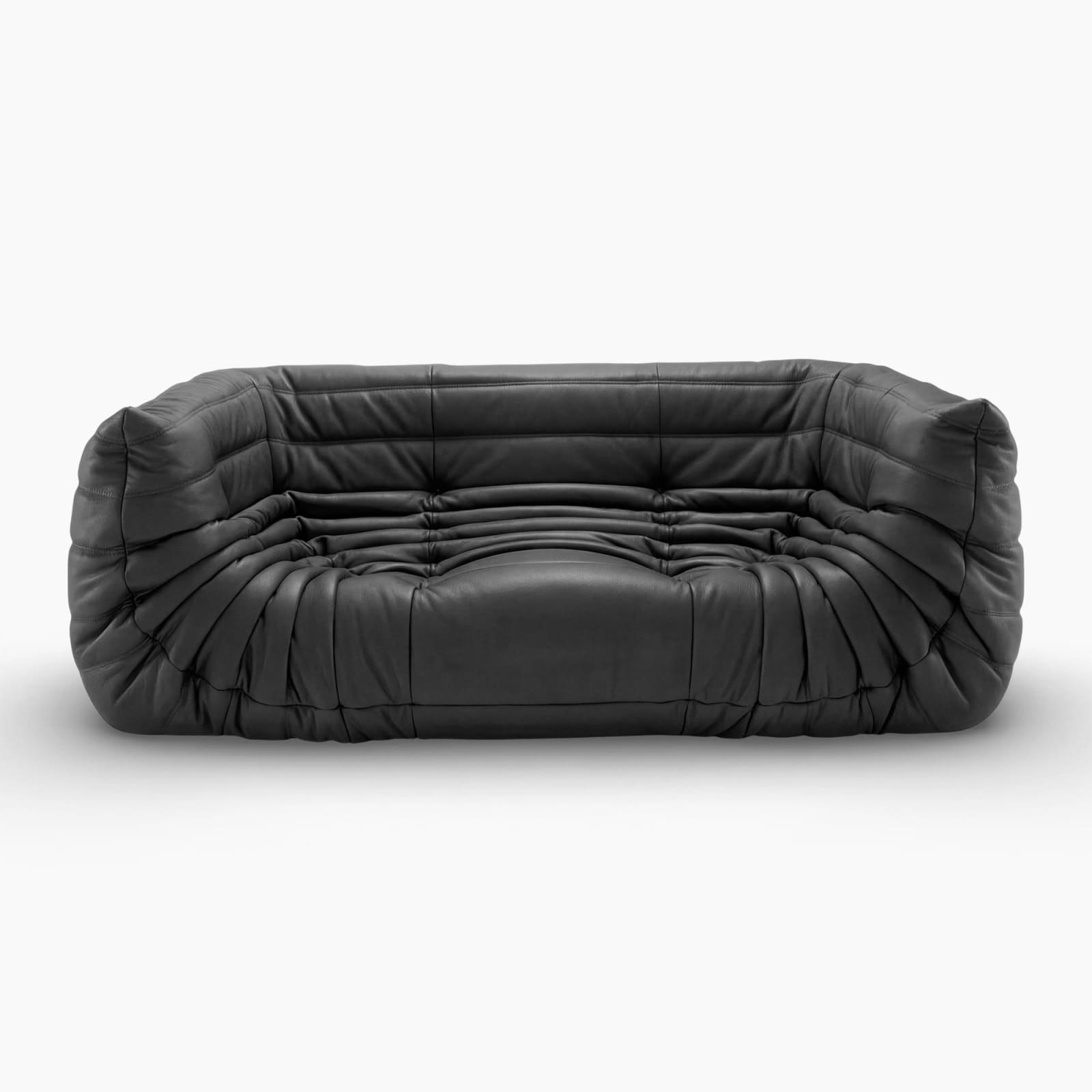
Leather Togo Sofa: What Full-Grain Buys You
Leather on a Togo earns its “buy it once” reputation, with realities attached.
Full-grain keeps the top layer of the hide intact, nothing buffed away, so the sofa develops a patina instead of wearing down, darkening and softening where you sit. Our leather pieces are upholstered by hand in full-grain hides with a water-repellent topcoat, in black and brown on every piece in the line.
It also suits the design: a genuine Togo has no rigid frame, just a multi-density foam core, so the cover only has to flex. A leather Togo sofa sinks exactly like a fabric one. Leather is the surface, not the support. If you pictured leather as stiff, that’s the misunderstanding.
The honest downsides: leather marks. Claws and belt buckles scratch it; on full-grain those marks usually brush out or become character. It runs warm against bare legs in summer and cool in winter, and wants occasional conditioning. None of that is hard; it’s just not zero-maintenance. If you want to price one out, our leather Togo sofa page shows current pricing.
The Leather Togo Chair and Mixing Covers in One Room
A leather Togo chair beside a fabric sofa works for a concrete reason: a chair gets sat in more per square inch than any cushion, so it takes exactly the daily wear leather handles best.
Our Togo chair comes in the same full-grain leather as the sofas, so a leather chair next to a fabric loveseat still reads as one family: same pleats, same proportions, different covers.
Fabric Togo Options: Velvet, Boucle, Linen, and Performance
Fabric buys color, softness, and a friendlier first touch than leather, but fibers differ so much that the material matters more than the word “fabric.”
Straight talk on our lineup. It is built on three materials: full-grain leather, velvet, and Alcantara performance suede. Boucle and linen Togo sofas exist, and good ones at that, but we don’t stock them. Here’s how to judge them fairly.
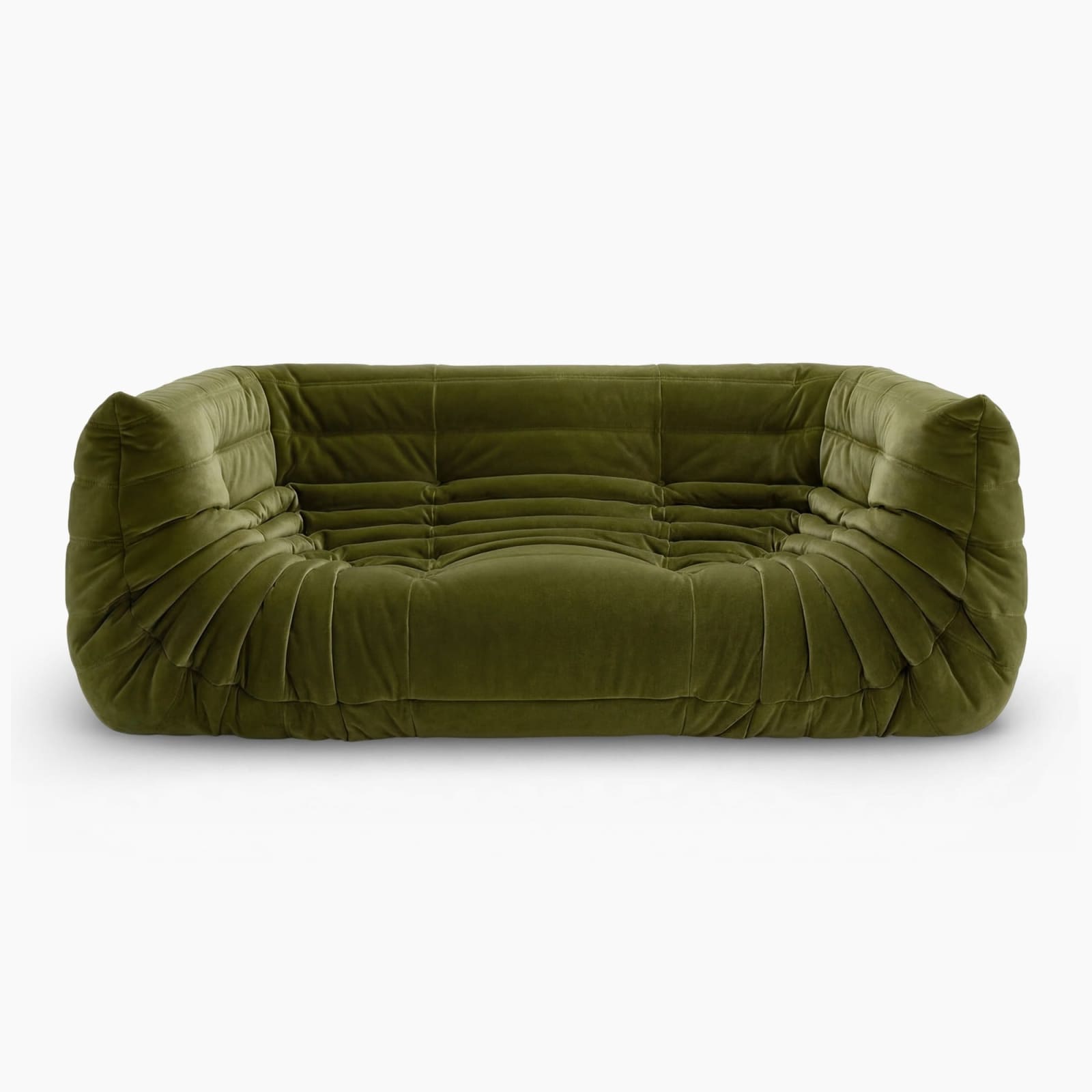
Velvet. Cotton or synthetic pile that catches light differently on every fold, so each waist fold reads as a shadow or highlight. Caveats: pile flattens where people sit (normal, brush it back), standing water marks it, and claws pull loops. If kids or pets share the room, choose synthetic over cotton velvet; it resists stains and crushing far better. Ours run to olive green, royal blue, and ruby red, and an olive green Togo sofa reads differently in daylight than under lamps.
Boucle. The looped, nubby wool-blend behind the “cloud-like” trend, and on a Togo it’s cozy and tactile like nothing smooth. The trade-offs: loops pill with friction, snag on claws, and stains are harder to lift from a textured weave. If you’re looking at a boucle Togo elsewhere, ask about the fiber blend, since more wool means warmer and softer but less forgiving, and whether the cover comes off for cleaning.
Linen. Casual, breathable, and relaxed. It reads as effortless rather than decorated. It also wrinkles on sight, and light linen shows spills. Linen-cotton blends keep the look with less fragility; accept the wrinkles as part of the style and keep it out of the heavy-use zone.
Performance microfiber (Alcantara). The family-room answer: a fine synthetic suede, soft and matte, that wipes clean with mild soap and water where other fabrics would soak up the spill. We offer it in dusty rose and curry. It’s not armor: claws can still pull it, and it lacks velvet’s jewel-box depth, but for daily spills, pets, and kids, it’s the one to pick.
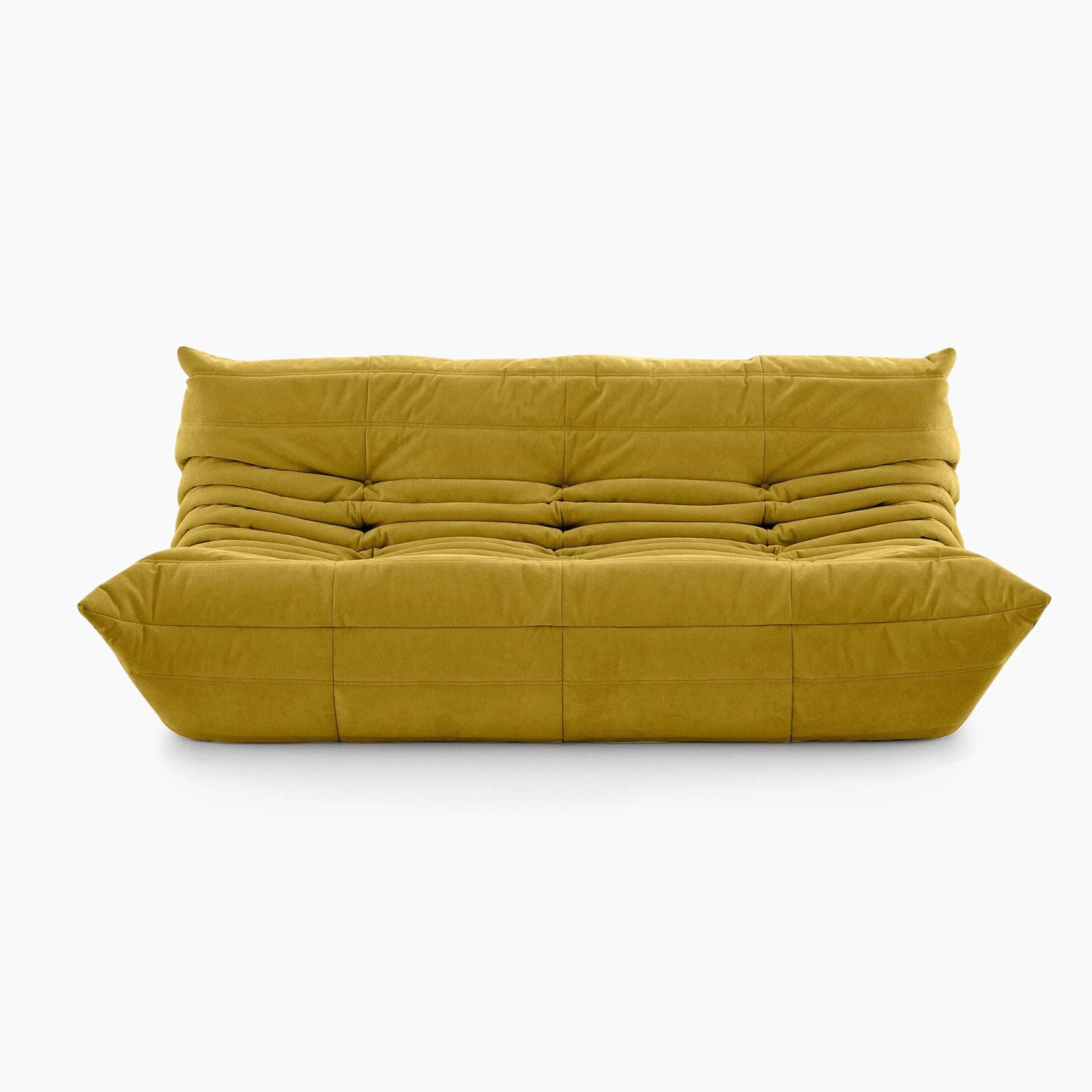
Black Togo Couch, Brown Leather, and How the Cover Sets the Color
Color and material are one decision, because the same hue reads completely differently in leather, velvet, and suede.
A black Togo couch in leather is the chameleon of the line: black recedes, so it vanishes into a bright room and lets the silhouette talk, while leather’s smooth surface keeps it from feeling heavy. Black velvet is a mood instead; it absorbs light and glows only where the pile shifts. Both are black; neither looks like the other. In leather we build the full line in black and brown. Brown is the sleeper pick, warmer against wood floors and kinder about dust and pet hair.
In fabric, depth is the asset: velvet colors shift with the light while Alcantara’s stay soft and matte. Rule of thumb: leather neutrals when the sofa is a decade-long backdrop; a saturated velvet or suede tone when the sofa is the statement.
Leather vs Fabric Togo: The Quick Pick Table
| Material | Best for | Watch out for |
|---|---|---|
| Full-grain leather | Excellent for low-maintenance longevity; ages into a patina; good with daily spills wiped fast | Scratches from claws and hardware; needs conditioning; warm on bare legs in summer; forgiving, not pet-proof |
| Velvet (synthetic preferred) | Excellent for look-first buyers who want color depth and softness | Pile crush, water marks, snagging; cotton velvet is the fragile one |
| Boucle | Good for cozy, textured, on-trend styling | Pills and snags; harder to clean; ask about fiber blend and removable covers |
| Linen | Good for casual, breathable, relaxed rooms | Wrinkles and stains easily; blends help; skip for heavy use |
| Performance microfiber (Alcantara) | Excellent for pets, kids, and spills; the easiest-care fabric option | Matte, less dramatic than velvet; claws can still pull it |
Three rules cover most rooms. Pets and kids who actually use the sofa: leather or Alcantara; wipeable beats cleanable. The look comes first: velvet for drama, boucle for cozy. Buying once: full-grain leather, because a patina improves while every fabric eventually fades, pills, or crushes.
If budget decides, price the same piece in leather and in your fabric of choice. Current pricing is on each product page, so weigh the gap against how long you’ll keep it. Our guide to what drives the cost of a Togo sofa walks through where that money goes.
Questions to Ask Before You Commit to Any Cover
The cover is what you see, but the build underneath decides whether a leather or velvet Togo actually holds up. Ask any seller:
- Foam density. A genuine Togo is all foam, no frame; comfort and shape retention come from a multi-density core. Ask what the densities are and whether the core can be replaced later. Ours can, via hidden buckle access, and a replaceable core outlives any cover.
- Pleats and stitching. The signature waist folds are stitched panel by panel. Crisp, even pleats are the difference between a considered build and a rushed one. Our guide to how to spot a bad Togo replica covers the tells.
- Removable covers. Zippers or buckles mean you can clean, and eventually replace, the cover without trashing the sofa. The single most useful question for fabric buyers.
- Returns. You can’t know how a cover feels until it’s in your room, so a 30-day window with the seller arranging pickup makes the experiment safe. No real return policy is information in itself.
The Bottom Line
Pick leather when you want the piece to age with you at low daily fuss. Pick fabric when you want color and softness: velvet or boucle for the look, Alcantara when pets and kids live there. Either way you get the same sink-in Togo sit; the cover just decides how the sofa lives in your house. Still torn? The Togo sofa and couch dupes page shows every piece in each material, and our design team can send a layout and cover mix if you’re stuck.
FAQ
Is leather or fabric better for a Togo sofa with pets?
Leather or performance microfiber, in that order. Both wipe clean fast, which matters when pets shed and have accidents, and leather shrugs off scratches that would pull a velvet or boucle loop. Boucle, velvet, and linen are snag- and stain-prone by comparison.
Does boucle pill and snag?
Yes, eventually. It’s a looped fiber, and friction from sitting plus pet claws fuzz and pull it over time. That’s true of every boucle, not a sign of a bad one. A tighter weave with some synthetic content slows it down.
Which lasts longer, leather or fabric on a Togo?
Full-grain leather, by a meaningful margin. Fabric fades, pills, and crushes with years of use; full-grain leather develops a patina most owners consider an improvement. The catch is that leather shows scratches more readily, so “lasts longer” assumes you can live with honest wear marks.
Is leather worth the extra cost on a Togo-style sofa?
Only if you’ll keep the piece long enough for the patina to pay off, meaning five-plus years. If you redecorate every couple of seasons, a fabric cover you love now is the better value. Compare current pricing on the same piece in leather versus fabric before deciding.
Can you wash a Togo sofa cover?
On many Togo-style sofas, yes. The covers unzip or unbuckle from the all-foam core. Ours come off for cleaning, but follow the care label rather than assuming machine-wash: leather and some velvet covers are wipe- or dry-clean-only, while performance microfiber handles mild soap and water well.
Written by