
How to Pick a Sofa Color That Works for Years
 Pumela Design
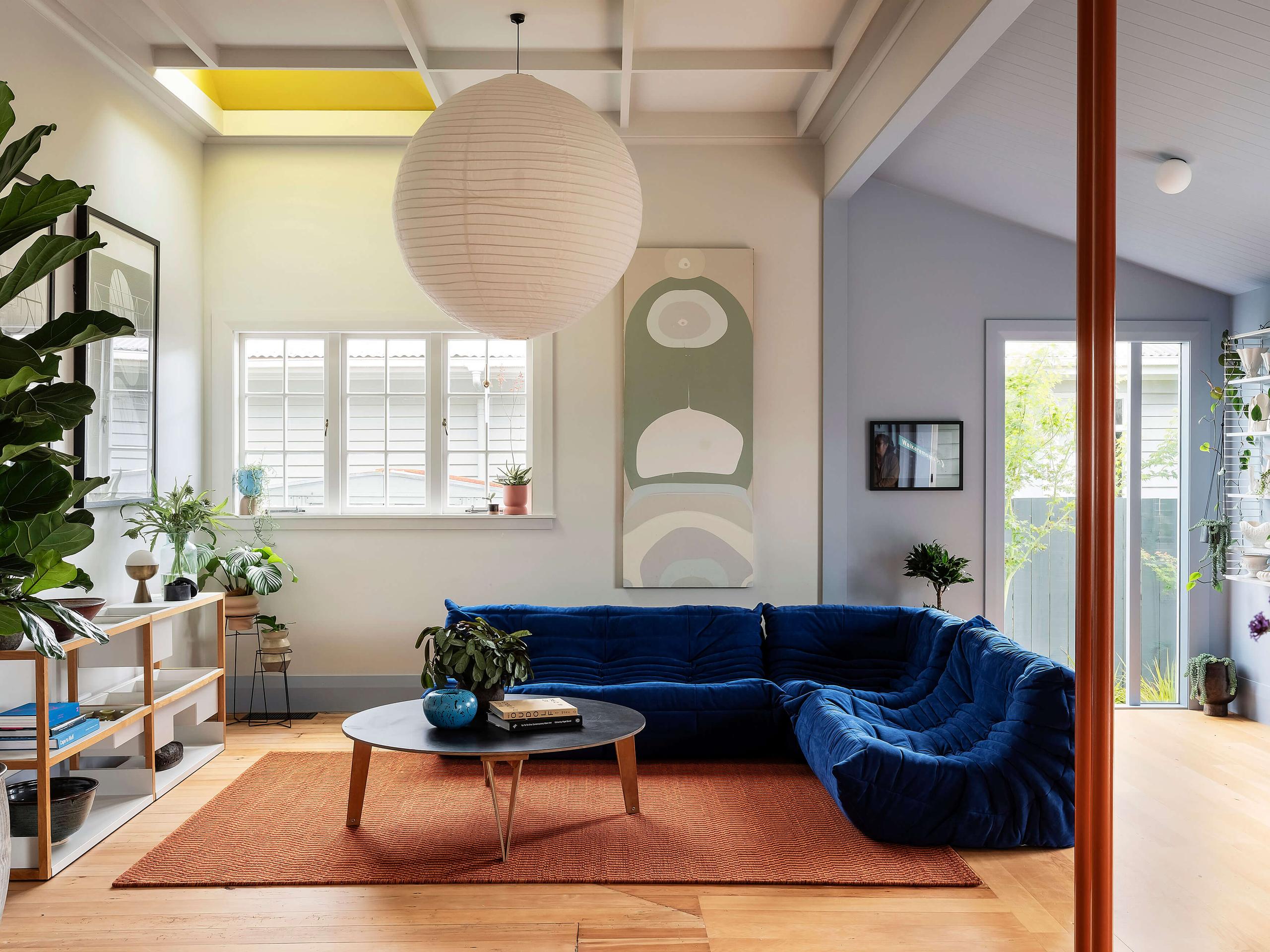
Choose a sofa color by starting with three things: the light in your room, who actually uses the sofa, and the colors already in the room. A neutral sofa is the safe choice, and a bold one is worth it when you want the sofa to be the focus.
What five questions should you ask before choosing a sofa color?
How much natural light does the room get, and at what time of day do you use it?
Is it a small room or a large one?
Who sits here: adults only, or children and pets too?
Do you want the sofa to blend in or to be the focus?
How often do you change your rug, walls and cushions?
How does light and room size affect sofa color?
Bright, sunny rooms: almost any color works. Deep colors such as green, navy or ruby look rich in strong light, and pale colors can look washed out.
Dim or north-facing rooms: colors turn darker and cooler. A mid-tone or warm sofa keeps the room from feeling heavy, while a very dark sofa can disappear.
Rooms used mostly at night: check the color under lamps as well as daylight, because velvet and suede in particular change with the light.
Small rooms: light or tone-on-tone colors make a sofa feel smaller. A dark sofa can still work if the walls and rug are light.
Large rooms: a bold color holds its own, and a low sofa in a strong color can anchor the space.
If your room is small, size matters as much as color. Our guide to choosing a sofa for a small apartment covers measuring the route and the walkway.
How do color and material work together?
The same color looks different depending on the material. This is where many sofa colors go wrong, so check the material as well as the swatch:
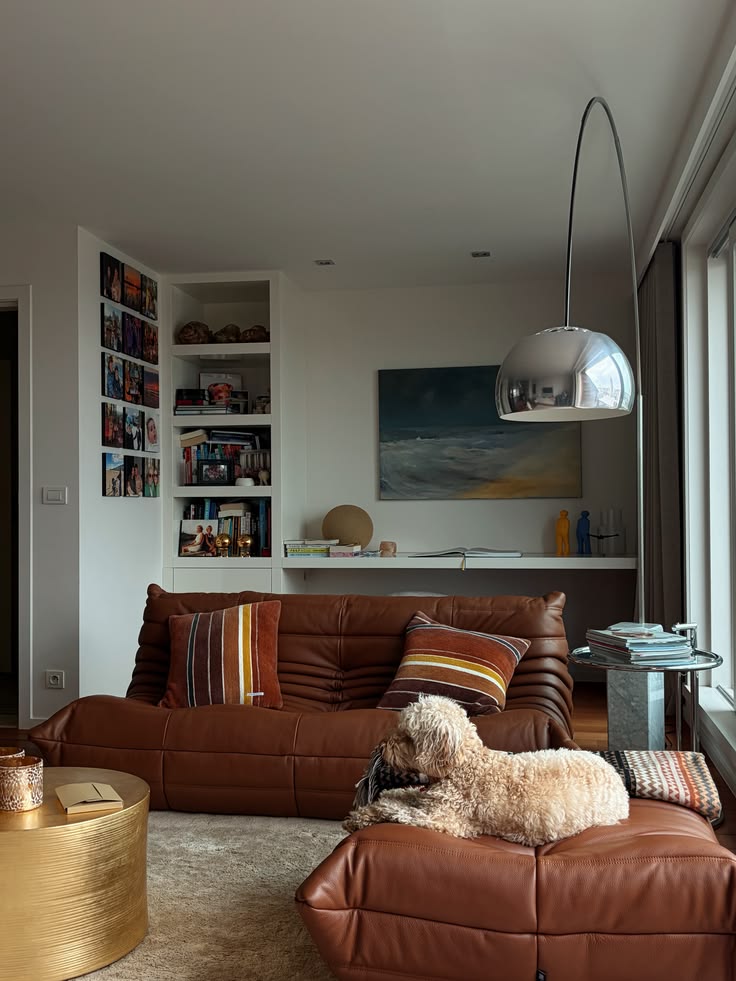
Leather: Pumela's leather is full-grain and aniline-dyed. Aniline leather shows patina and everyday wear over time, so a brown or black sofa can look slightly different in places as it ages. That is a property of this kind of leather, not a defect.
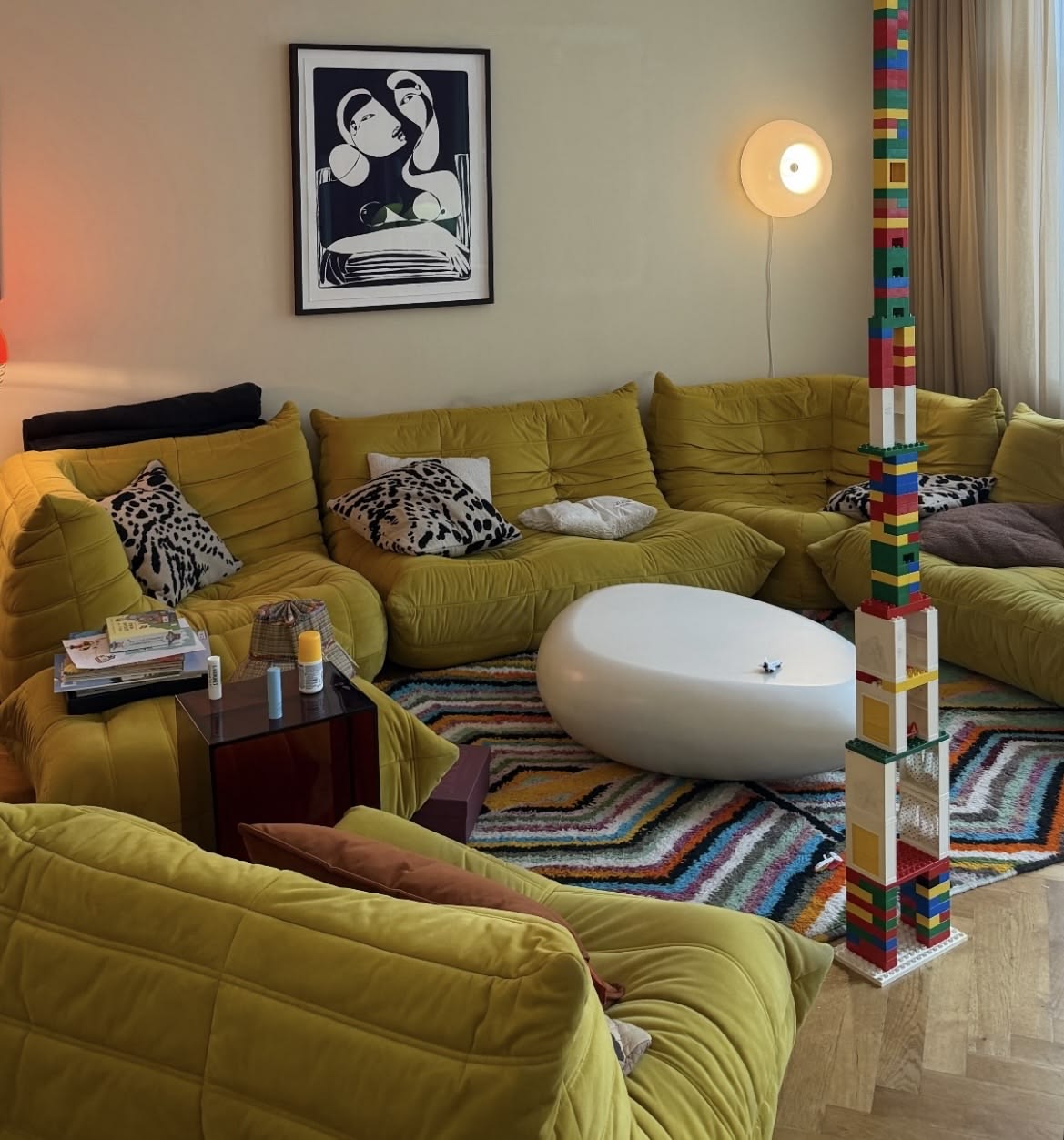
Velvet: the pile catches light differently on every fold, so each fold reads as a shadow or a highlight. Deep colors look richest in velvet.
Alcantara: a fine synthetic suede with a soft, matte finish, which makes colors look calmer than velvet.
Our leather vs fabric guide goes through each material in detail.
Which sofa colors suit kids, pets and everyday wear?
Color and material work together. Dark and mid-tone colors, and textured fabrics, usually hide everyday marks better than pale, smooth ones.
Pet hair: light hair shows on a dark sofa and dark hair shows on a light one, so choose a color close to your pet's coat if hair bothers you.
Kids: mid-tones and darker colors hide smudges better than cream or white, and a wipeable surface helps more than any color.
Spills: a blotted spill is easier to deal with on a surface that does not soak it up, so ask the seller about the cover's care routine before you choose.
Will a sofa color fade in the sun?
It can. Strong sunlight can fade dyes over time. Pumela's care guide says to keep a sofa out of direct sunlight for more than 4 hours a day, and to keep it at least 30 cm from heat sources such as radiators, fireplaces and hot air vents. If your room gets a lot of sun, put the sofa away from the window, or choose a mid-tone color, which shows fading less than a very deep one.
Neutral or bold: which Pumela color suits your room?
A neutral sofa works with almost any room and almost any change of cushions or rug. A bold sofa makes the room around it, but it is harder to change later. If you are unsure, ask yourself whether you will still like the color when your rug, curtains and walls change.
For reference, here is how the seven solid-color Pumela Togo-style finishes tend to suit different rooms. There are also two print finishes, Leopard and Zebra.
Black leather: A dark, graphic shape. Suits: modern or monochrome rooms and bright spaces. Pairs with: white walls, light wood and a textured rug.
Brown leather: The warm neutral. Suits: wood floors, earthy palettes and relaxed rooms. Pairs with: cream, sage green and navy.
Olive green velvet: A calm, natural green. Suits: rooms with plants, wood and soft light. Pairs with: cream, brass and warm wood.
Royal blue velvet: A strong, saturated accent. Suits: plain, light rooms where the sofa is the one color statement. Pairs with: white, warm wood and a neutral rug.
Ruby red velvet: The boldest finish. Suits: rooms where the sofa is the only strong color. Pairs with: charcoal, cream and dark wood.
Curry Alcantara: A warm yellow in a matte finish. Suits: brown, cream and wood-toned rooms. Pairs with: brown leather accents, white walls and natural fibers.
Dusty rose Alcantara: A soft, muted pink. Suits: calm rooms with grey, cream or deep green. Pairs with: deep green cushions, grey walls and light wood.
Leopard and Zebra prints: bold patterns for a room where the sofa is the statement. They cost more than the solid colors and are best with a plain room around them.
Which sofa colors go with your floor?
The floor takes up a large part of what you see around a low sofa, so check the pairing. In our view, these work well:
Light wood: brown leather, black leather and olive green velvet give a clear contrast with the pale floor.
Medium wood or walnut: royal blue velvet and dusty rose Alcantara contrast with the warm tone, while curry Alcantara sits close to it.
Dark wood: curry Alcantara, dusty rose Alcantara and ruby red velvet stand out against a dark floor, and black leather can disappear.
Tile or concrete: warm colors such as brown leather, olive green and curry soften a cool, hard floor.
A rug in between changes the result, so treat these as a starting point.
Should a sofa be lighter or darker than the walls?
Either can work. A sofa darker than the walls anchors the room and reads as a clear focal point. A sofa lighter than the walls makes a small room feel more open. Matching the sofa to the wall color is the quietest option and works best in a relaxed, low-contrast room. If you already own a brown leather piece, the colors that go with a brown leather sofa are covered separately.
How can you test a sofa color at home?
Ask for fabric samples and look at them at different times of day.
Put the sample on your floor and next to the walls, and view it from where you will sit.
Look at it under lamp light after dark.
Leave it out for a few days, then see whether you still like it.
A simple way to decide
Decide how much light the room gets and how large it is.
Decide who uses the sofa and how hard they are on it.
Pick neutral or bold, depending on whether the sofa should blend in or lead the room.
Match the color to a material you are happy to care for.
Test a sample at home before you order.
See every finish together in the Pumela Togo-style collection.
Frequently Asked Questions
What color sofa makes a room look bigger?
Light, low-contrast colors that sit close to the wall color, such as cream or soft grey, make a room feel more open. A low sofa also keeps sightlines clear.
What color sofa never goes out of style?
In our view, neutral colors such as black, brown, grey and cream age best, because they work with changing rugs, cushions and walls.
Is it OK to have different colors of furniture?
Yes. Mix colors on purpose: repeat a color or a tone between two pieces, let one color lead, and treat the sofa as the main piece.
Written by