
How to Choose a Sofa for a Small Apartment
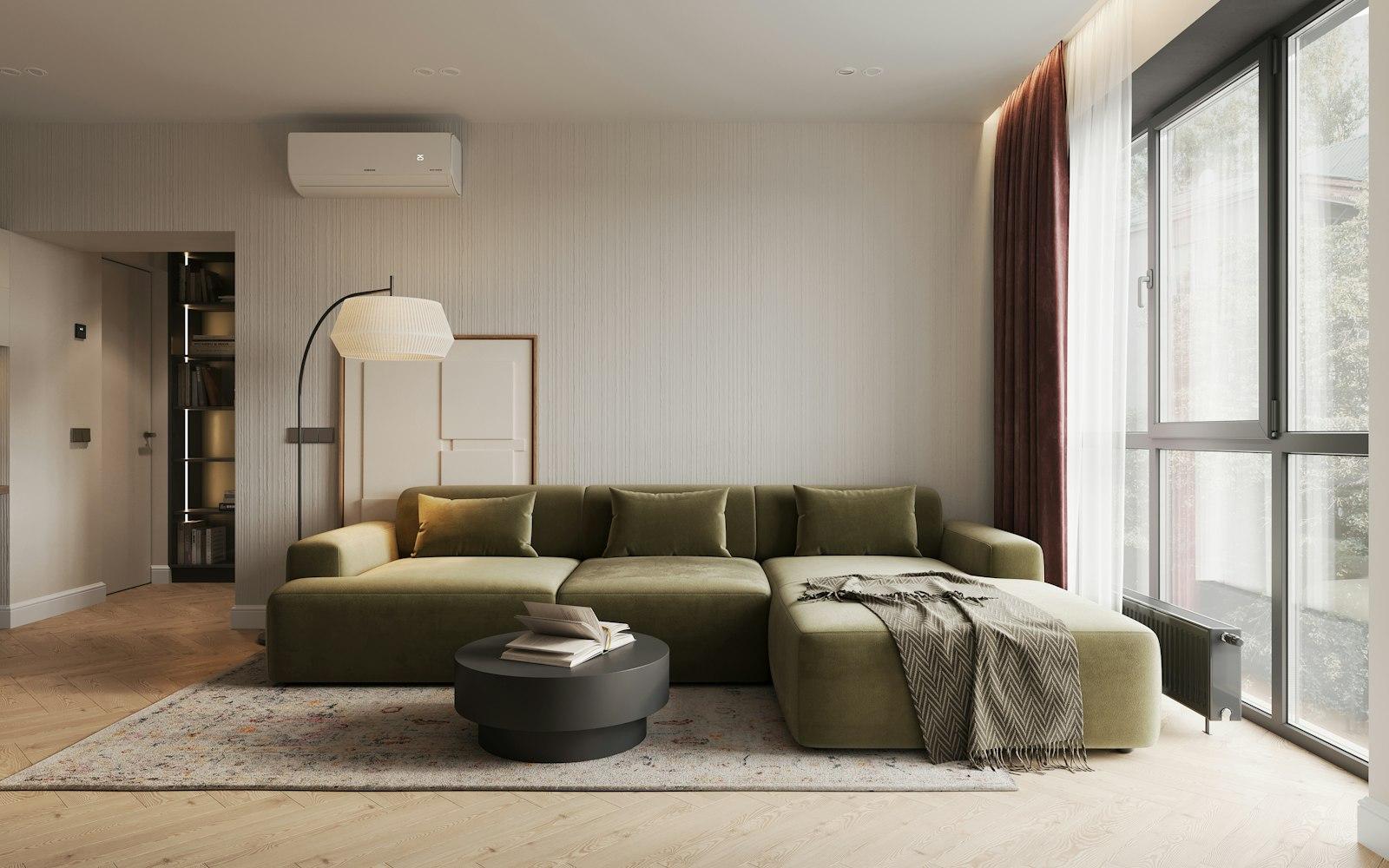
To choose a sofa for a small apartment, measure the route in first, then pick the shallowest sofa you can live with. Leave 30 to 36 inches (76 to 91 cm) to walk past it and about 14 to 18 inches (36 to 46 cm) between the seat and the coffee table.
A small apartment changes what you should look for in a sofa. The piece that works is rarely the longest one. It is the one with the right depth, the right visual weight, and a path from the front door that does not involve removing a window.
Measure the Route, Not Just the Wall
A sofa that fits the wall can still fail at the door. Before you fall for anything, walk the delivery path with a tape measure and write down the numbers:
The width and height of every doorway on the way in, including the building entrance.
The narrowest point of the hallway or stairwell, and the ceiling height there.
The elevator car, if you are not walking up: door width, depth and diagonal.
The final spot, plus 30 to 36 inches of walkway beside it.
Then check the one number that decides most deliveries: the sofa's diagonal depth, measured from the top of the back to the front edge of the seat. If that diagonal is wider than your narrowest door, the sofa will not tip through it, however good the room looks on paper.
Before you order, mark the footprint on the floor with painter's tape and live with it for a day. You will know quickly whether the walkway feels easy or tight. Planning around our Togo-style pieces? Our guide to Togo-style sofa dimensions and layout covers the module geometry.
What size sofa fits a small apartment?
A common designer rule of thumb, the 2/3 rule, says a sofa should be about two-thirds the length of the wall behind it. For our modules that works out to roughly:
Loveseat (51″ wide): a wall of about 77″.
Sofa (68″ wide): a wall of about 102″.
Treat these as a starting point. If your wall is shorter than the figure, go down a module or pair a Loveseat with an Ottoman.
Depth Before Length
In a small room, overall depth decides whether the space still works. In our view, a conventional sofa is around 36 inches deep, and in a room under about 12 feet wide, 36 to 38 inches is a sensible ceiling. Every inch you save goes straight into the walkway.
Seat depth matters as much as the footprint. In our view, if you mostly sit upright, to work, eat or talk, 20 to 22 inches suits most adults. If you mostly sink in, 23 to 26 inches feels like lounging. Go much below 20 inches and you perch instead of sit. The deeper and lower the seat, the better it lounges and the harder it is to stand up from. Decide which you do more of.
Shape: Straight Runs Beat Big Ls
A large sectional can overwhelm a small floor plan, eating the walking space that makes the rest of the room usable. A straight two-seater or a compact three-seater, paired with a light chair or an ottoman you can move, usually gives you more seating per square foot and more flexibility when friends come over.
If you like the idea of growing into the piece, choose something modular: start with a short run and add a section later instead of replacing the whole thing. Walkways first, seats second.
Legs, Light, and Visual Weight
Two details make a small room feel bigger without adding square footage. First, raised legs: visible floor under the sofa lets light travel, and the room reads as more open. Second, a lower back: anything below the window line keeps sightlines clear, which makes the whole wall feel taller.
You do not need both. A piece with no legs but a very low back keeps the wall above it open, so the room still reads tall. You trade visible floor for a clear sightline. Both approaches work, for different reasons, so pick one and keep the rest of the room consistent.
Arms are the quiet variable. Slim arms add inches of usable seat inside the same outer width, while wide, rolled arms do the opposite. When you compare two sofas, compare the usable inside width, not the outer length.
Small Details That Matter More in Small Rooms
Seat cushions. Three separate seat cushions quietly tell people where to sit, and the middle one is rarely anyone's favorite. A single bench seat lets two people spread out or three squeeze in.
Color and texture. Lighter fabrics recede and help a small room breathe, but a mid-tone hides everyday wear better. Pick for how you actually live, not how it photographs once.
Where a Togo-Style Piece Fits, and Where It Doesn't
Run our own Togo-style range through the checklist above and it passes some tests and asks for a trade-off on others. Here is the honest version.
Where it works in a small room
Width. The Loveseat is 51 inches wide and the Sofa 68, both on the shorter side, so they fit a short wall.
Height. Every seating piece is 27 inches tall, low enough to keep the wall and window above it open.
Growth. Every seating piece shares the same height, depth and seat height, so you can start with one and add another later. Nothing bolts together.
Where it asks for a trade-off
Depth. Every seating piece is 40 inches deep, deeper than the compact sofas above. That depth is what lets you sink in, so budget for it in the walkway. At 40 inches deep, ours sit at the deep end, so in a room under 12 feet wide a Loveseat plus Ottoman works better than a Sofa.
Seat height. The seat is 15 inches high and deep. Lovely for long evenings, slower to get up from. If knees or hips are a concern, for you or for regular guests, that matters.
No legs. The base sits on the floor, so you get the low-sightline effect, not the visible-floor one.
Skip it if you mostly sit upright, need an easy stand-up, or your walkway is already under 30 inches. A raised, shallower sofa will serve you better.
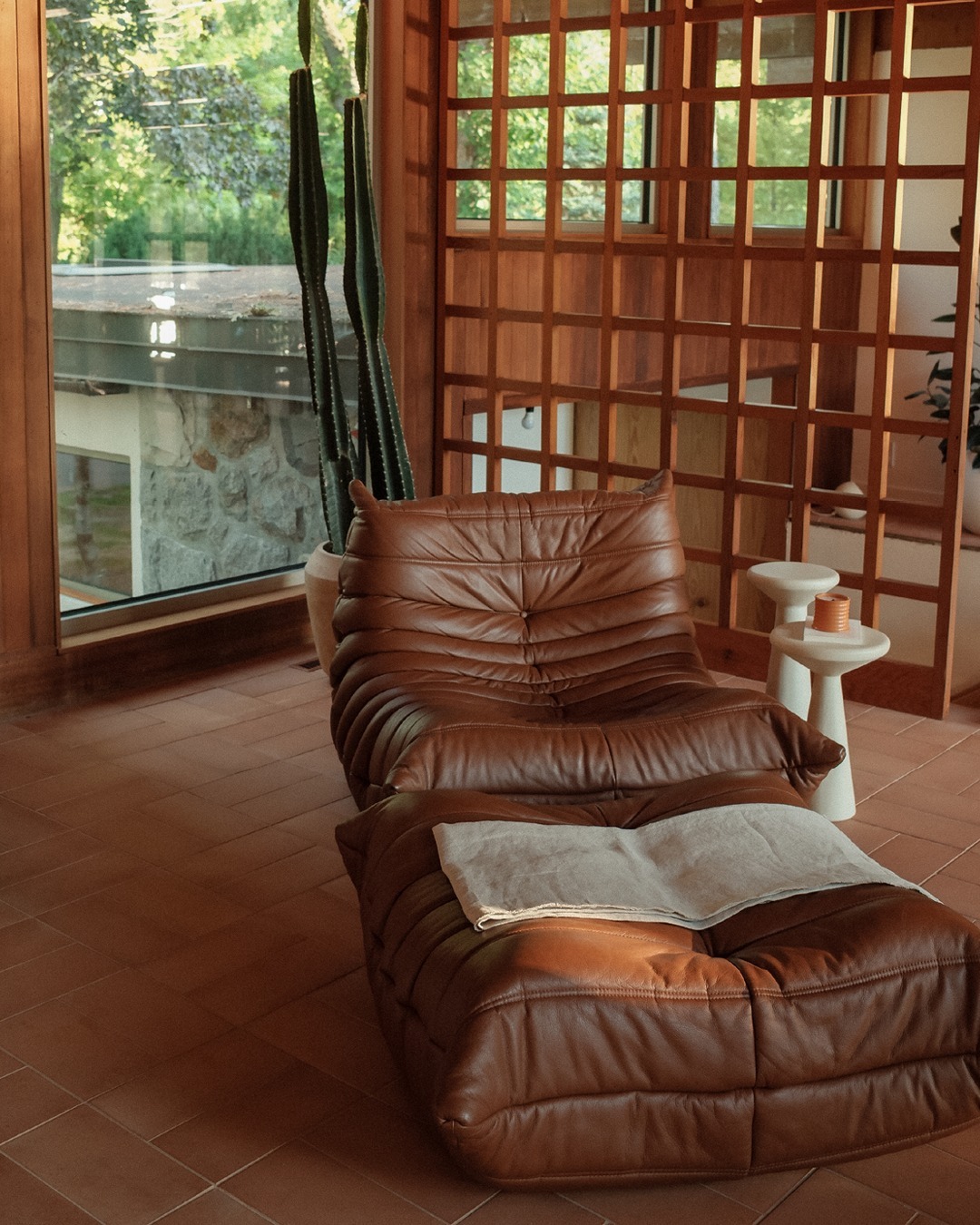
If it does suit you, start smaller than you think. The Fireside Chair is the easiest way in: it owns a reading corner without a sofa's footprint. The Loveseat suits most apartment walls. The Ottoman works as a footstool, an extra seat, or a chaise when you push it against the chair. Five of the six pieces make sense in a small apartment; the 78-inch Fireside Sofa is for bigger rooms. Fabric prices below, with full-grain leather adding $100 to $200 per piece:
Ottoman, $599: footstool, extra seat or chaise extension
Fireside Chair, $999: one-person lounge, reading corner
Corner, $1,249: corner anchor for an L-shaped run
Loveseat, $1,449: two-person seating for most apartments
Sofa, $1,649: a full sofa when the room allows
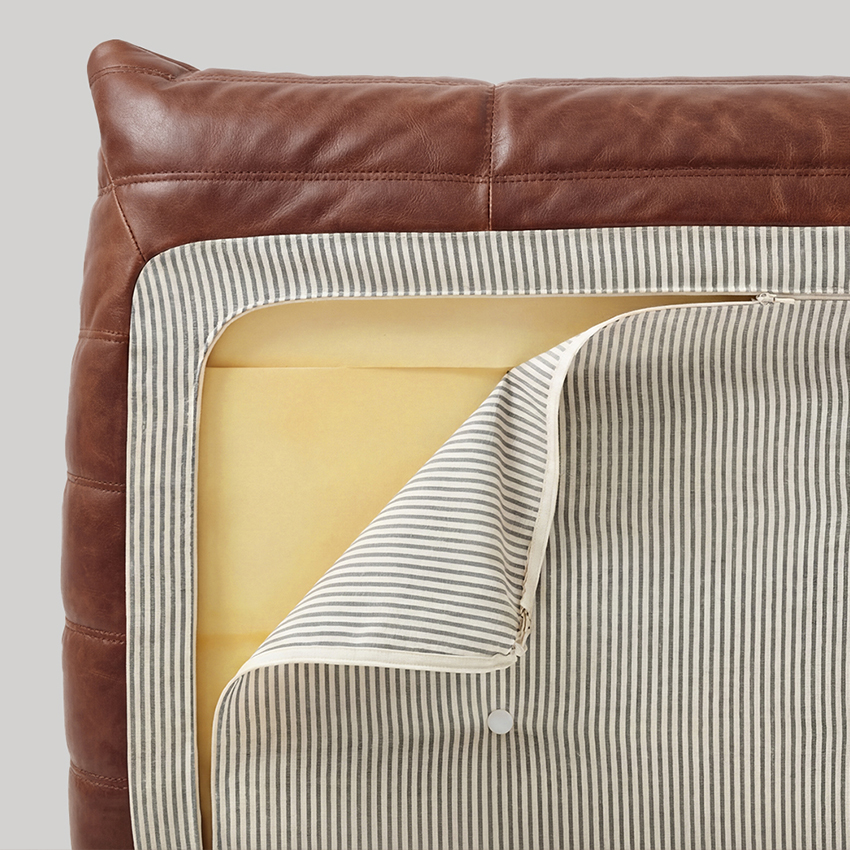
Every piece is built the same way: a frame-free, all-foam core, upholstered by hand, with quilted pleats stitched panel by panel and no wood, springs or legs, in full-grain leather, velvet or Alcantara. If you are comparing Togo-style pieces, check the construction first: a frame-free, all-foam core is what gives this shape its sink-in sit. US shipping is free. Pieces are made to order in 7 to 14 days, then take 5 to 7 weeks to arrive in the US. Change-of-mind returns are accepted within 30 days of delivery if the piece is unused and in its original packaging; you cover return shipping and a 25% restocking fee. Defects and damage on arrival are on us.
Choose the piece that fits the route and the life, not the one that fills the wall. For the next decisions, read our guide to leather versus fabric upholstery and our take on whether $2,000 is too much for a couch.
Frequently Asked Questions
How big is too big for a small living room?
A working rule: leave 30 to 36 inches of walkway past the sofa and about 14 to 18 inches between the seat and the coffee table. If your layout can't hold both, the sofa is too big, whatever its absolute size.
Is a two-seater enough for a couple?
For most couples, yes, especially with a second seat somewhere else in the room. Count how often three or more people sit together. If it is most weeks, look at a compact three-seater or add a light chair.
Can a small room fit a sectional?
Only a small one, and only if the chaise end sits away from the main walkway. Measure the chaise end's depth before ordering; it is the dimension people most often underestimate.
Is a frame-free foam sofa comfortable for everyday use?
It suits lounging better than upright sitting. The seat is low and deep, which puts you in a relaxed, reclined posture and makes it slower to stand up from, so it suits working on a laptop or eating at the sofa less well.
Can a Togo-style sofa work in a studio apartment?
Often, yes. The 27-inch back sits low enough to divide sleeping and living zones without blocking light. Budget for the 40-inch depth, though: in a tight studio, start with the Fireside Chair and the Ottoman, and add the Loveseat later. Every seating piece shares the same geometry, so they line up.
Written by
I write about soft seating the way I think about it: how a piece is built, how it wears by year three, and whether it still feels good on a gray Tuesday. Deep seats, warm textures, washable covers, those are the things I keep coming back to.