
What Is a Modular Sofa? Modular vs Sectional Explained
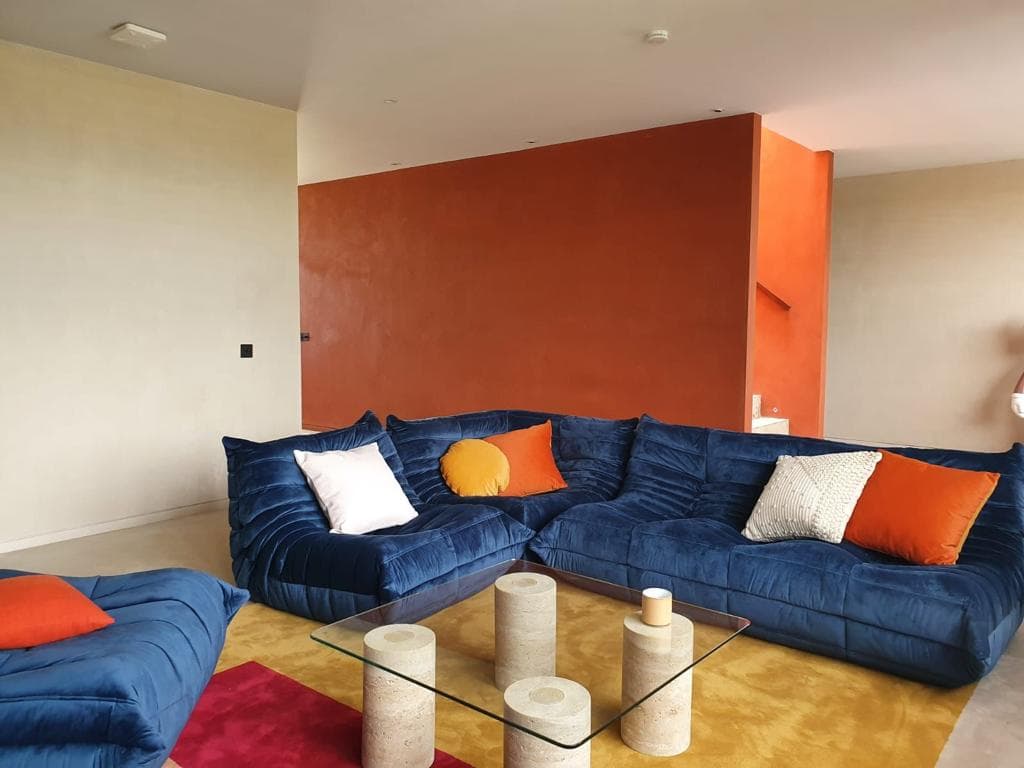
A modular sofa is a set of separate seats that you can arrange, split up or add to, instead of one fixed piece. A sectional is usually a set of connected sections that form one fixed layout, while a modular sofa is built from independent pieces you can rearrange. Which is better depends on how often you move, how much you rearrange and how you want to buy.
This guide explains the difference, how modular pieces stay together, the real downsides, and how to plan a layout with sizes and prices, using Pumela's Togo-style modules as the worked example.
What is the difference between modular and sectional sofas?
The two words overlap in everyday talk, and many shops use them loosely. As a working rule, here is how they usually differ:
Pieces: a modular sofa is made of standalone modules, each finished on every side. A sectional is usually made of sections designed to sit together as one shape.
Layout: modular pieces can be rearranged into a straight sofa, an L or separate seats. Many sectionals have a set layout, such as a left-hand or right-hand chaise, so the shape you buy is the shape you keep.
Moving and delivery: smaller pieces are easier to carry through a doorway or up a staircase than one large sofa. With Pumela modules, depth is 40″ on every seating piece, and the widest piece is the 78″ Fireside Sofa, so measure your narrowest doorway or turn against those two numbers.
Adding or replacing a piece: with a modular sofa you can buy one more module to extend the set. Replacing or changing one piece also means buying one module, not a whole new sofa.
Price per seat: compare the cost per seat as well as the total, because several pieces can add up.
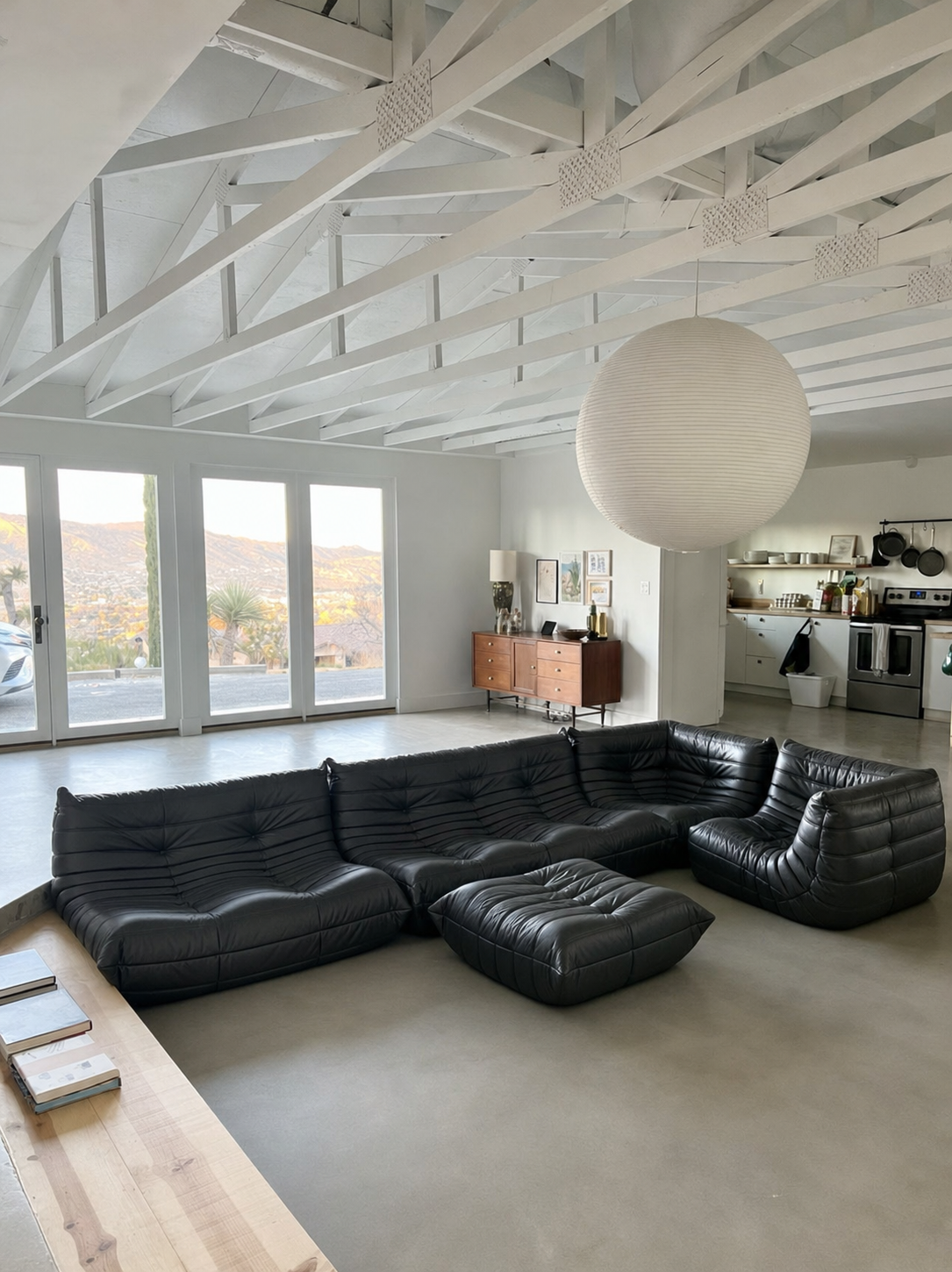
How do modular couches stay together?
There are four common ways. Which one a sofa uses affects how it feels day to day:
No connection: pieces sit side by side. They are the easiest to rearrange, and they can drift apart on a smooth floor if nothing holds them in place.
Non-slip base: a grippy underside keeps each piece where you put it, while still letting you move it when you want to.
Clips or straps: pieces lock together, which keeps a long run tight but makes rearranging slower.
Metal brackets: the most rigid option, usually found on sectionals with a frame, and the hardest to reconfigure.
The Pumela Togo-style modules use the second approach. Each piece has a non-slip fabric underside with floor-safe glides. The construction is frameless and all foam, with no wood or metal frame. That means nothing bolts together, and pieces can be moved or rearranged without tools.
What modules can a modular sofa include?
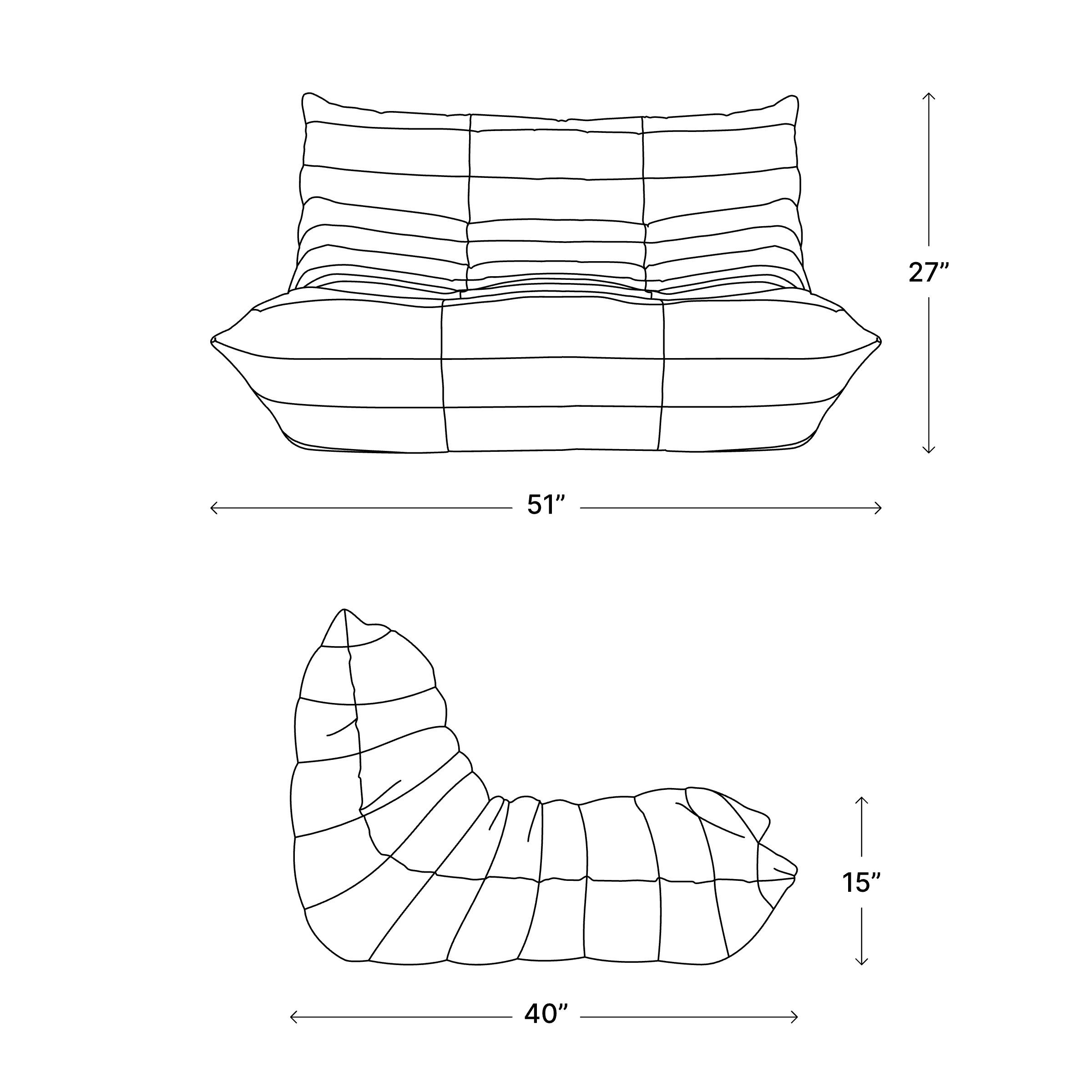
Most modular ranges are built from a few repeating pieces. This is the Pumela range, with the same 27″ height and 40″ depth and a seat of about 15″ on every seating module:
Fireside Chair: 34″ wide, one seat, from $999.
Loveseat: 51″ wide, two seats, from $1,449.
Sofa: 68″ wide, three seats, from $1,649.
Fireside Sofa: 78″ wide, three generous seats, from $1,949.
Corner: 40″ wide and 40″ deep, one seat, from $1,249. A wedge that sits between two pieces and turns the run through 90 degrees.
Ottoman: 34″ wide, 31″ deep and 13″ high, from $599. A footrest, an extra seat, or a chaise extension.
Prices are starting prices in velvet or Alcantara, and full-grain leather costs $100 to $200 more per module.
What are the disadvantages of modular sofas?
Modular sofas are flexible, but they are not perfect:
Gaps: there can be small gaps between pieces, especially on a straight run.
Drift: pieces can move apart if nothing connects them, so check how a sofa holds its position before you buy.
Price per seat: several pieces can cost more than one standard sofa with the same number of seats.
Planning: you need to plan the layout, because a low, deep module takes real floor space.
Resale value: we could not find reliable resale data for modular sofas, so do not count on getting money back.
How do you plan a modular layout?
Start with the room, then choose the pieces. Here are three layouts built from Pumela modules, with starting prices in velvet or Alcantara:
Apartment: Loveseat and Ottoman
Pieces: Loveseat (51″ wide) and Ottoman (34″ wide), 85″ of seat width side by side.
Total: from $2,048.
Space: looks balanced on a wall of about 10 to 11 feet, with 30″ to 36″ of walkway in front.
Use: the Ottoman works as a footrest, an extra seat, or a chaise extension when you push it against the loveseat.
Living room: Sofa, Fireside Chair and Ottoman
Pieces: Sofa (68″ wide), Fireside Chair (34″ wide) and Ottoman (34″ wide).
Total: from $3,247.
Space: put the Sofa on the long wall, turn the chair at an angle beside it, and let the Ottoman sit between them.
Use: a good fit when you want separate seats rather than a single long run.
L-shaped sectional: Sofa, Corner and Loveseat
Pieces: Sofa (68″), Corner (40″ wide and 40″ deep) and Loveseat (51″).
Total: from $4,347.
Space: with the Corner in the angle, expect roughly 108″ along one wall and 91″ along the other, so measure both walls before you order.
Use: because nothing bolts together, you can pull the L apart later and rebuild it as a straight run.
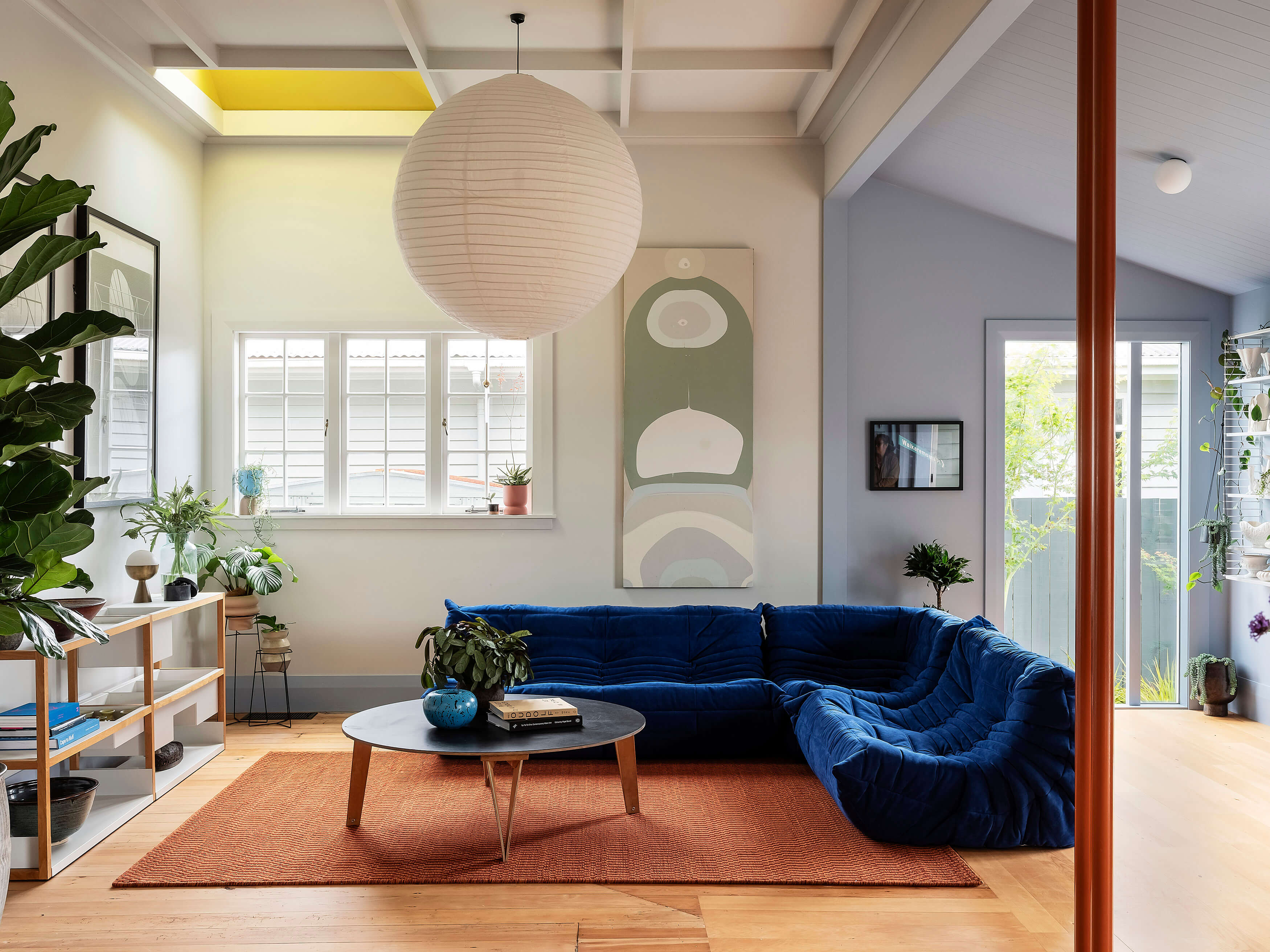
Our dimensions and layout guide explains module widths and how much floor space each layout needs, and the cost breakdown compares each module's price.
What should you check before buying a modular sofa?
Is every side of each module upholstered, so pieces look finished when they are not against a wall?
Do the height, depth and seat height match across modules, so they line up at the back, arm and seat?
How do the pieces hold together, and is that what you want?
Can each module be bought on its own, so you can add or replace one piece later?
Does the widest module fit your narrowest doorway, hallway and stair turn?
What are the foam and cover, and what does the warranty cover?
Is a modular sofa right for you?
Yes, if you move often, rearrange rooms, or want to start small and add pieces later.
Yes, if you want to use the same pieces as one long sofa in one home and as two seating areas in the next.
Maybe not, if you want one fixed shape and the lowest price per seat.
Check the total, not just the first piece, because a full set is a bigger purchase.
If you are still deciding how much to spend, our guide to what a $2,000 sofa should buy you covers what to look for. You can see the full Togo-style collection or start with the Corner module, which turns a straight run into an L.
Frequently Asked Questions
Is modular furniture durable?
Durability depends on the materials and the build, not on whether a sofa is modular. Ask what the cushions are made of, how it is sewn, and what the warranty covers.
Can you buy modular sofa pieces separately?
It depends on the brand. At Pumela, each module has its own product page and can be bought on its own, so you can start with one piece and add more later.
Are sectional couches outdated?
No. In our view a sectional is still a good choice if you want one fixed shape and a single large seating area. A modular sofa is the better choice if you rearrange, move often or want to add pieces over time.
Do modular sofa pieces slide apart?
They can if nothing holds them in place. Some designs use connectors, while others, including ours, rely on a non-slip underside with floor-safe glides. Check how a sofa holds its position before you buy.
Written by
I write about soft seating the way I think about it: how a piece is built, how it wears by year three, and whether it still feels good on a gray Tuesday. Deep seats, warm textures, washable covers, those are the things I keep coming back to.