
How to Use and Style an Ottoman in a Small Room
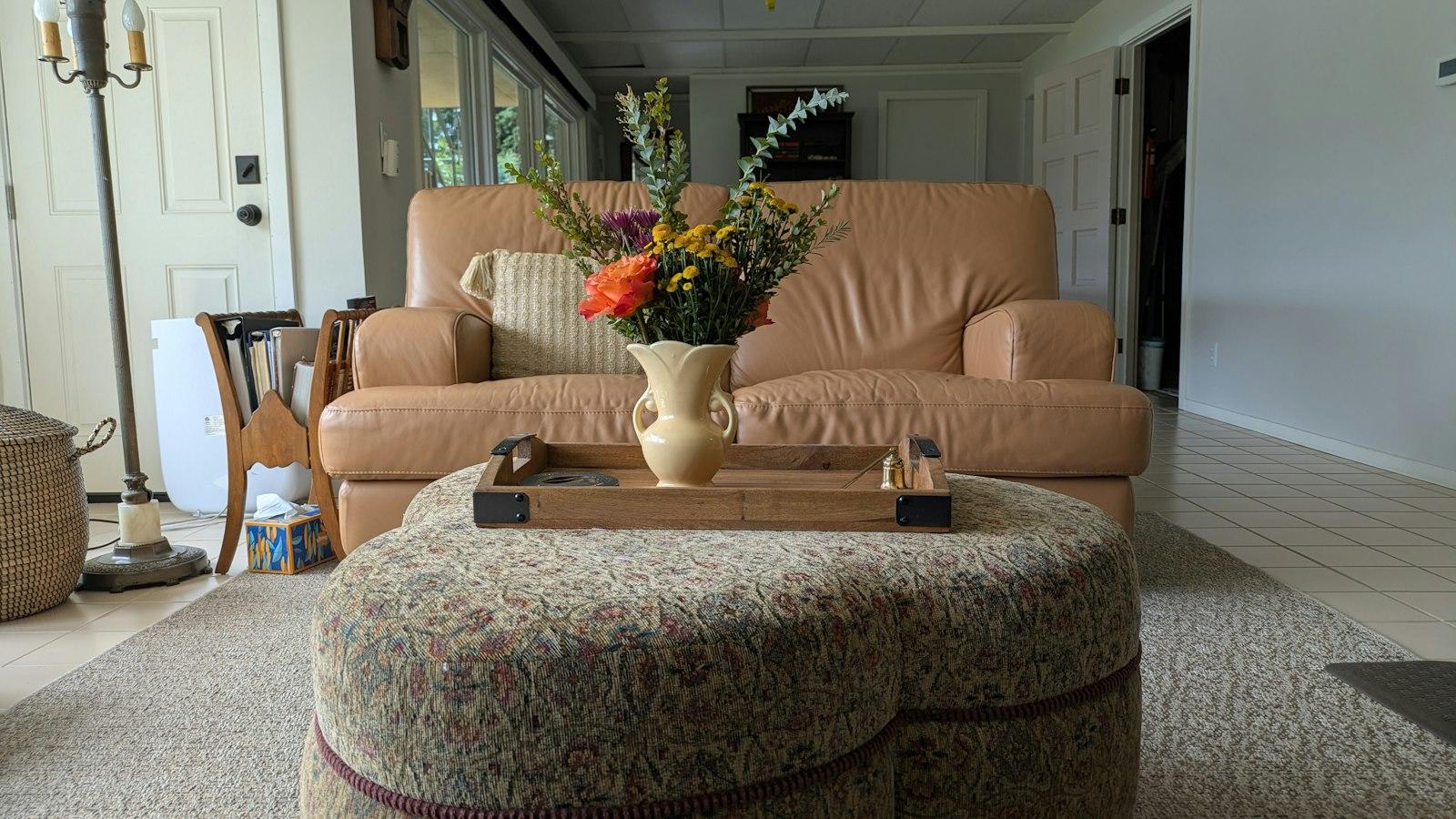
Give an ottoman a job first, then choose its size and height for that job, and keep about 14 to 18 inches (36 to 46 cm) between it and the sofa. An ottoman is the most flexible piece in a small living room: a footrest when you are alone, an extra seat when friends come over, a chaise when you push it against a chair, and a coffee table with a tray on top.
This guide walks through the ways to use one, the trade-offs against a regular coffee table, and how to pick the right height, with our own Togo-style Ottoman as the worked example.
Seven Ways to Style an Ottoman
Footrest. The default job, and still the best one. Put it 14 to 18 inches from the front of the seat, close enough to reach with your legs and far enough to stand up past.
Extra seat. At 34 by 31 inches and 13 inches high it works as a low perch for one person, better for a quick sit than a long dinner.
Chaise extension. Push it against a chair or the end of a loveseat and the two pieces read as one long seat. This is the trick that makes a small room feel like it has a lounge in it.
Coffee table. Add a sturdy tray and the top becomes a surface for cups, remotes and a candle. The tray is what makes it work: without one, every glass wobbles.
Side table. Next to a chair instead of in front of the sofa, with a lamp on a tray. Useful when the walkway is tight and a full table would block it.
Play surface. A quilted, soft-topped ottoman has no hard corners at knee height, which suits a room where children play.
Room marker. In a studio, set it at the edge of the rug to mark where the living zone starts. A low piece alone barely marks a zone; the rug edge does the work, the ottoman finishes it.
Where should you put an ottoman?
In front of the sofa: keep 14 to 18 inches (36 to 46 cm) between the sofa seat and the ottoman, close enough to reach and far enough to stand up past.
Walkway: leave 30 to 36 inches (76 to 91 cm) to move past it.
Footprint: our Ottoman is 34 inches wide and 31 inches deep, so mark that size on the floor before you order.
Beside a chair: push it against the chair for a chaise, or use it as a side table with a tray.
What do you put on top of an ottoman?
Start with a tray. On a pleated, soft top it does two jobs: it gives cups a flat, steady base, and it gives the styling a boundary so the top looks planned instead of dropped on. Pick a rigid tray, wood or metal, at least a third of the top.
Then follow a short formula: one tall thing (a small vase or a candle), one flat thing (two books), and stop. If you can no longer see the fabric, take one thing away. Odd numbers read more relaxed than pairs.
For color, choose one of two directions. Match the sofa for a calm, continuous look, or pull a shade from a cushion or the rug so the ottoman reads as a deliberate accent. In a small room, the first makes the seating read as one piece; the second gives the eye one place to land.
Finish with a throw folded over one end. It softens the edge, and it is the first thing you reach for on a cold night.
Lift the tray off when the ottoman needs to be a seat or a footrest. That is the whole point of styling it this way.
Can an ottoman be used as a coffee table?
In a small room, an ottoman usually wins, for three honest reasons. It is soft at knee height and at toddler height. It doubles as seating, which a table never does. And it moves when the room needs to open up.
The trade-offs are just as real. A quilted top is not a stable surface for a full dinner spread, so heavy eaters still want a tray or a folding table. Ours has no storage inside. If you need hidden storage, a storage ottoman is the better buy. Heat and fabric don't mix, so a tray matters more than it sounds.
Height and Size: The Numbers That Matter
Rule of thumb: a footrest works best level with the seat or up to 2 inches lower. Much higher and your knees climb above your hips. Ours is 13 inches against 15-inch seats, right at the low end of that range.
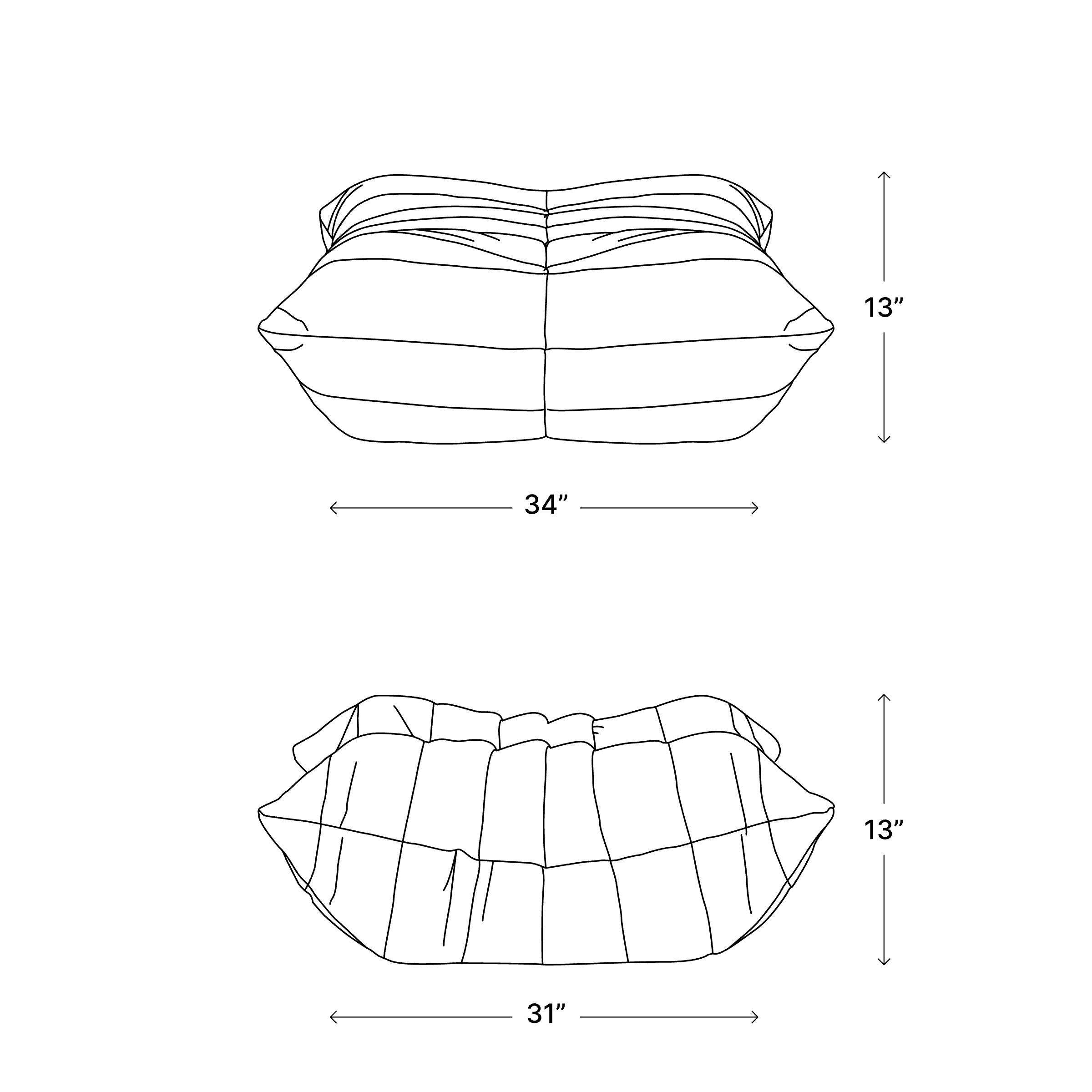
For width, a footrest only needs to be about as wide as one seat cushion, and a coffee-table stand-in works at half to two-thirds of the sofa's length. At 34 inches, ours sits at about half of our 68-inch Sofa and two-thirds of the 51-inch Loveseat. Check your walking space before ordering anything, and leave 30 to 36 inches (76 to 91 cm) to move past it. Remember the ottoman is 31 inches deep, so measure its footprint too.
Our Togo-Style Ottoman
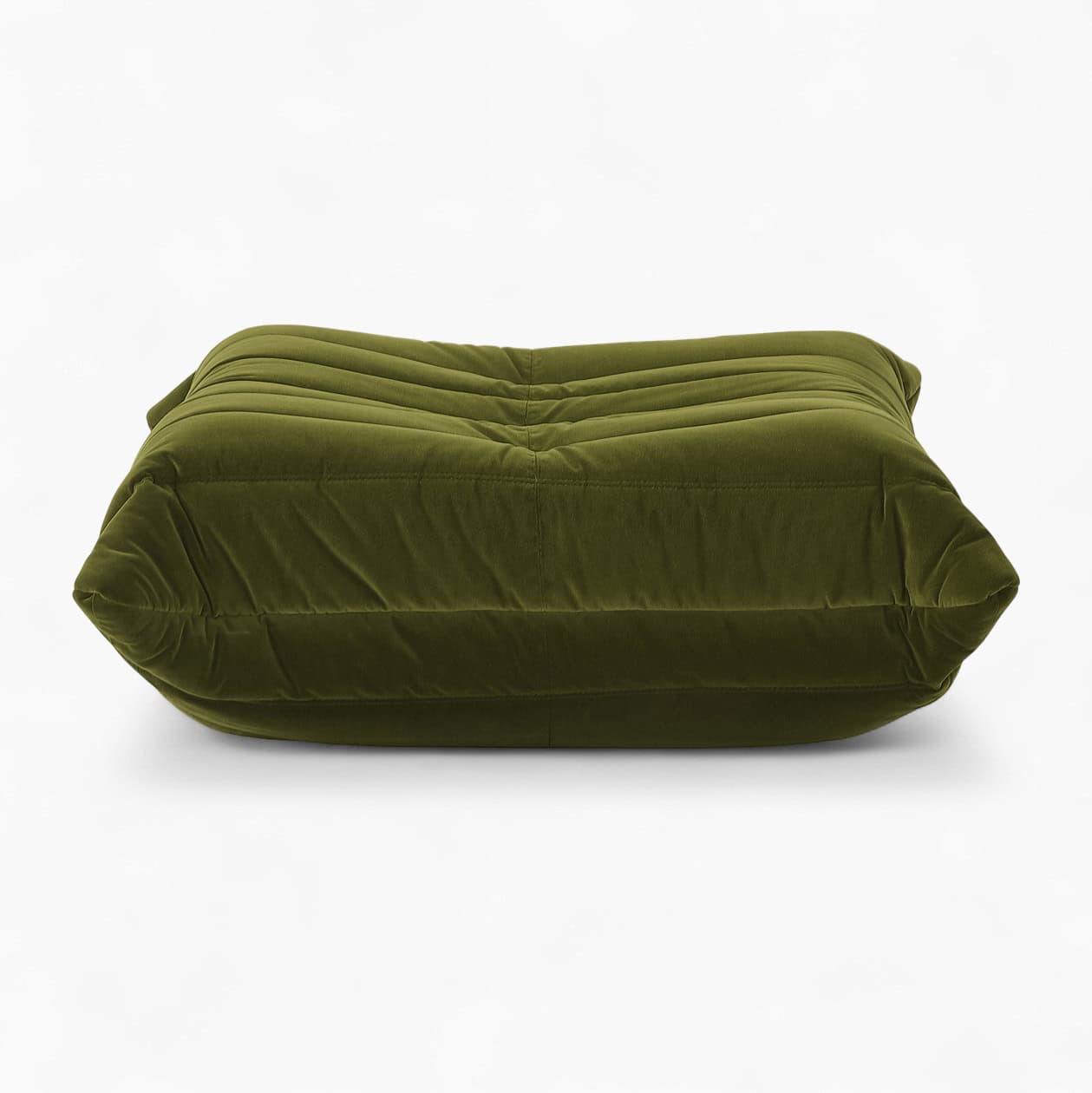
Pumela's Ottoman is built over the same frame-free, all-foam core as the rest of the range, with quilted pleats stitched panel by panel. It is 34 inches wide, 31 deep and 13 tall, two inches below the 15-inch seats. Push it against the Fireside Chair and you get a chaise with a slight step down.
Price. $599 in fabric, $699 in full-grain leather. Leather adds $100 over the fabric version and wipes clean.
Fabrics. Full-grain leather in brown or black, velvet in ruby red, royal blue or olive green, and Alcantara in curry or dusty rose.
Covers. Fabric covers: spot clean, with a professional low-moisture clean once a year, and keep heat away. See our care guide. Leather covers wipe clean.
Delivery. Free US shipping. Made to order and delivered in 5 to 7 weeks in the US. Change-of-mind returns are accepted within 30 days of delivery if the piece is unused and in its original packaging; you cover return shipping and a 25% restocking fee. Defects and damage on arrival are on us.
See the Togo-style collection.
An ottoman earns its floor space by doing two jobs at once, so pick the two your room actually needs and let the rest go. If what the room really needs is a second seat rather than a footrest, our guide to leather versus fabric helps with the next choice, and our cost guide, module by module shows how an ottoman fits a full set.
Frequently Asked Questions
Can you sit on an ottoman?
Yes. At 34 inches wide and 13 inches high, ours works as a low seat for one person. Sit centered on the top rather than on an edge.
Does an ottoman have to match the sofa?
No. Matching fabrics read calm, but a contrasting color or print is what makes the ottoman read as a deliberate piece rather than an afterthought. Pick the contrast if the room is otherwise quiet.
Written by
I write about soft seating the way I think about it: how a piece is built, how it wears by year three, and whether it still feels good on a gray Tuesday. Deep seats, warm textures, washable covers, those are the things I keep coming back to.