
How to Clean a Leather Sofa (Aniline & Full-Grain)
 Pumela Design
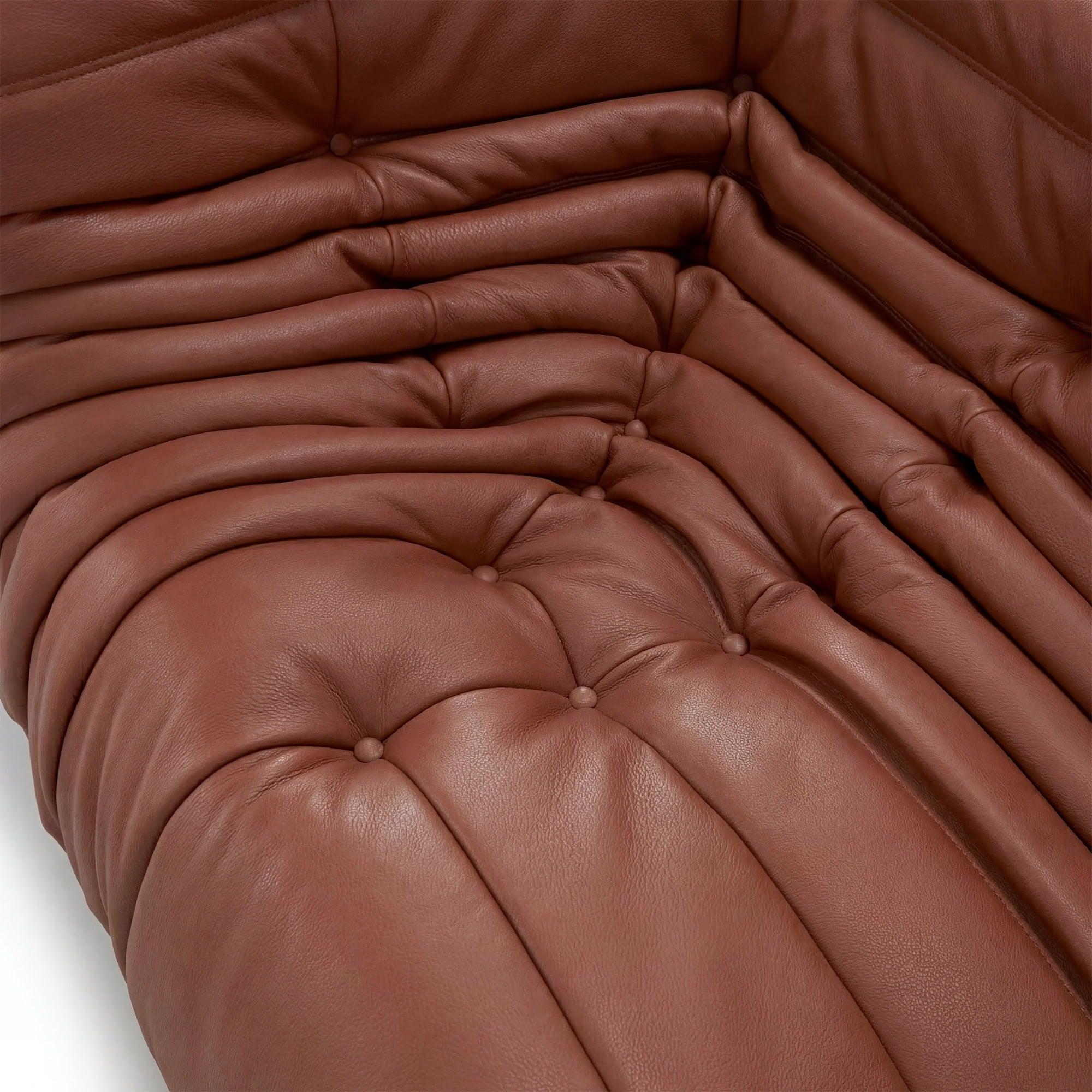
Aniline leather is dyed right through and has no protective pigment layer on top. That is why it marks, darkens and takes on a patina instead of sitting behind a coating, and it is why the routine is short but specific: dry dusting every week, a barely damp wipe once a month, a pH-neutral conditioner twice a year, and none of the household cleaners people normally reach for.
What makes aniline leather different?
Our leather is full-grain and aniline-dyed. The surface of the hide is intact rather than sanded or covered, so the grain you see is the grain of the animal, and the colour sits in the leather instead of on it.
Two things follow from that. First, liquids have a direct route in, so a spill marks sooner than it would on a pigmented leather. Second, the surface is meant to change: it softens, deepens in tone and gathers marks where you sit. Darkening at the seat and arms is the material behaving correctly, not a fault.
If you are still deciding between the two materials, our leather vs fabric guide compares how each ages.
What normal wear looks like
Aniline leather is expected to change, and knowing which changes are meant to happen saves you from cleaning something that does not need it. Softening at the seat, a deeper tone where you sit, and fine surface marks on the arms are the material ageing, not dirt.
What the routine is for is everything on top of that: dust, water marks, oil from hands, and the occasional spill. Clean the piece to remove those, and leave the patina alone.
The weekly routine: dust, no water
The weekly pass is dry because the care guide puts water on the monthly routine, not on the weekly one. You are only lifting the dust before it gets worked into the grain.
Work over the seat and the arms first, because that is where dust collects, then the back and the pleats.
Use a soft, dry microfibre cloth and fold it into quarters, so you have a clean face to rotate to as each one picks up dust. Work with light pressure and follow the direction of the pleats rather than scrubbing across them, because the channels are where dust settles and where rubbing shows first.
Give the pleat channels and the seams a deliberate pass with the edge of the cloth. Surface dust that is not lifted now gets worked deeper into the grain each time someone sits down, and by then it is a job for the monthly wipe rather than the weekly one.
The monthly wipe
Wring a soft cloth in clean lukewarm water until it is barely damp, wipe in long even strokes, then dry the surface immediately with a second dry cloth. Never let water sit on the hide.
Do it one panel at a time. Wipe in long, even strokes in a single direction, overlapping each pass slightly, and keep the cloth moving rather than pressing. The point of the monthly pass is to lift what the dry cloth left behind, not to scrub the hide.
Dry immediately with the second cloth before moving to the next panel. Water left to sit is what leaves a ring at the edge of the damp area, and a ring is harder to deal with than the mark you started with.
Every six months: condition the hide
Apply a small amount of pH-neutral leather conditioner. We recommend Saphir Renovateur. Work it in with a circular motion, leave it for 20 minutes, then buff off the residue with a dry cloth.
Every six months is what the care guide sets. Conditioner is not a cleaner, and it is not a substitute for the dusting and wiping routine.
Work section by section, taking a small amount each time rather than pouring it on. A circular motion with a soft cloth covers the surface evenly, and going over the pleats and seams means the hide is conditioned where it flexes most.
Leave it for the full 20 minutes, then buff the residue off with a dry cloth. The result to expect is a surface that feels supple rather than shiny; aniline leather should still look like leather, with its marks and its patina, not like a coated hide.
What not to use on a leather couch?
Some of the most common cleaning advice on the internet is wrong for aniline leather, because it was written for leather with a pigment coating. Keep these off the piece:
Alcohol and acetone — they strip the dye.
Baby wipes — they contain both alcohol and detergent.
"All-purpose" household cleaners — their pH is not controlled.
Saddle soap or anything alkaline — it takes the aniline finish off the surface.
These strip the finish rather than clean it, which is why the care guide lists them as things never to use. If one has already been used, contact us rather than trying a second product to undo the first.
How do you clean ingrained dirt out of aniline leather?
Dirt that has settled into the grain needs the routine, not a stronger product. Work through it in this order: dust with a dry microfibre cloth first, then wipe with a barely damp cloth in long even strokes, then dry immediately with a second cloth.
Do not scrub, and do not reach for a household cleaner. If the mark is still there after that pass, it is a case for a specialist rather than for a second attempt at home, so send a photo to [email protected].
Water, oil, ink and scratches
Four situations cover almost everything that happens to a leather sofa. The answer for each is different, and only one of them ends with you cleaning the piece:
Water splash. Blot gently with a dry cloth. If a ring forms, dampen the whole panel evenly with a barely damp cloth and let it dry naturally, so the edge of the mark is not the only wet part.
Oil or grease. Blot, do not rub. Dust the spot with cornstarch and leave it overnight, then brush it off softly in the morning. Repeat if needed.
Ink. Do not touch it with home remedies. Email [email protected] and we will point you to a leather specialist before the pigment sets.
Scratch or scuff. Light scuffs buff out with a fingertip and body heat. Deeper scratches deepen the patina, so either embrace them or condition the area to blend it.
If you are dealing with ink, dye transfer from clothing, or a spill you cannot identify, stop and send us a clear photo at [email protected] first. That is faster than guessing and much cheaper than a failed home fix.
Sun, heat and humidity
Leather is more heat-sensitive than fabric. Keep the piece out of direct sunlight, which both fades and dries the hide, and keep heat sources at least 50 cm away, including radiators, fireplaces and warm air vents.
Dry indoor air cracks grain over time, so aim for 40 to 60% humidity and 18 to 22 °C. The care guide notes that a small room humidifier in winter pays for itself.
One more: sitting on the piece in damp clothes, a swimsuit or a gym kit, is how water gets into the hide unevenly. That one is worth mentioning to guests.
Why you should not cover it permanently
Leather needs to breathe, so a throw draped over the same sofa all year round traps heat and moisture against the surface. Use one when you need it, then take it off.
The same care applies to what comes into contact with the seat: sharp jewellery, belt buckles and pet claws mark aniline leather more easily than a coated hide.
When to call a professional
The care guide sets the leather routine at dry dusting weekly, a barely damp wipe monthly, and a pH-neutral conditioner every six months. For anything beyond a spill, and for ink, dye transfer or a substance you cannot identify, the guide's advice is to contact us and send a photo rather than to try a stronger product.
The full routine for fabric covers is different, and it is on the same page. If you are choosing between covers, the Togo sofa collection lists what each piece is available in, and the Sofa page shows the leather colourways.
The routine in four lines
Weekly: dry microfibre, no water.
Monthly: barely damp cloth, then dry immediately.
Every six months: pH-neutral conditioner, 20 minutes, then buff.
Never: alcohol, acetone, baby wipes, all-purpose cleaners, saddle soap or anything alkaline.
Frequently Asked Questions
Can you use Dawn dish soap on a leather couch?
The care guide does not include dish soap. It lists a pH-neutral leather conditioner for routine care and warns against saddle soap and anything alkaline, so a washing-up liquid is not the product to use on aniline leather.
Is it safe to use Clorox wipes on leather?
No. Household wipes usually contain alcohol or a general-purpose cleaner, and both are on the list of things not to use on this leather because they strip the aniline finish.
Is Murphy's oil soap good for leather furniture?
The care guide does not list it. It lists a pH-neutral leather conditioner for routine care and warns against saddle soap and anything alkaline, so oil soap is not among the approved products.
How can I deep clean my leather sofa?
There is no deep-clean product in the care routine. Condition with a pH-neutral product every six months, and for marks that do not come off with a barely damp cloth, contact us before trying anything stronger.
Written by